English
 Español
 tiếng việt
 русский
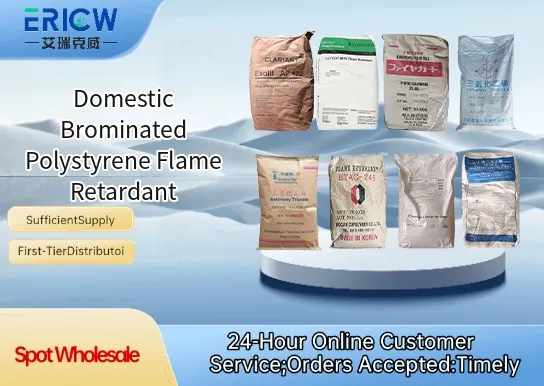
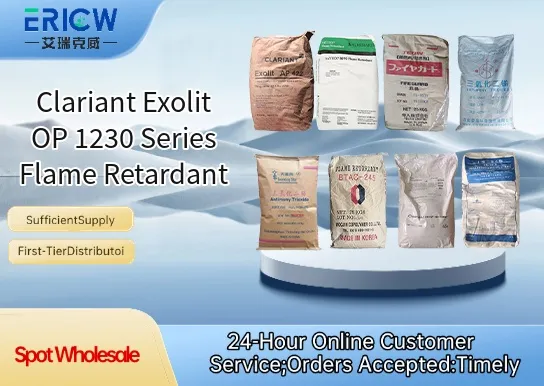
High bromine content (68–72% w/w) ensuring excellent flame retardancy in thermoplastics.
Thermal stability up to 300 °C, compatible with high-temperature polymer processing such as ABS and HIPS extrusion.
Low volatility and minimal migration, maintaining long-term fire performance and product integrity.
Good compatibility with common engineering plastics without compromising mechanical properties.
RoHS-compliant formulation meeting current regulatory requirements for restricted substances.
Flame-retarded ABS for electronic housings and business equipment enclosures.
HIPS blends used in TV back covers and appliance interior components.
Polycarbonate/ABS (PC/ABS) alloys for automotive interior trim and dashboards.
Engineering plastic compounds requiring UL94 V-0 rating at 1.5 mm thickness.
| Chemical Type | Brominated polystyrene (BPS) |
| Product Form | Powder or free-flowing granules |
| Appearance | White to off-white homogeneous powder/granules |
| Bromine Content | 68–72% (w/w, by XRF analysis) |
| Decomposition Onset Temperature | ≥290 °C (by TGA, 10 °C/min, N₂ atmosphere) |
| LOI (Limiting Oxygen Index) | ≥28% (in 20 wt% loading in HIPS) |
| Key Features | Halogen-based, polymer-bound flame retardant with low smoke density |
| Primary Applications | Thermoplastic electronics, automotive interiors, and household appliances |
Q1: What is the primary mechanism by which this brominated polystyrene functions as a flame retardant?
A: It acts primarily in the gas phase by releasing bromine radicals upon thermal decomposition, which interrupt free-radical chain reactions critical to flame propagation. Its polymeric structure also contributes to char formation and melt-dripping suppression in certain polymer matrices.
Q2: Is this domestic brominated polystyrene compatible with engineering thermoplastics such as ABS, PC, and PC/ABS blends?
A: Yes — it exhibits excellent compatibility and dispersion stability in ABS, polycarbonate (PC), and PC/ABS blends. Its polymeric nature minimizes blooming and plate-out issues commonly associated with low-molecular-weight brominated additives, supporting long-term thermal and mechanical performance.
Q3: How does its thermal stability compare to other brominated flame retardants, and what processing temperatures can it withstand?
A: As a high-molecular-weight polymer, it offers superior thermal stability relative to small-molecule brominated compounds — typically remaining stable up to processing temperatures encountered in extrusion and injection molding of engineering plastics (e.g., 220–260 °C), without premature degradation or corrosive HBr evolution.
Q4: Does this product meet current environmental and regulatory expectations for restricted substances in electronics applications?
A: It is formulated to comply with major industry expectations for RoHS-compliant brominated flame retardants — containing no added antimony trioxide synergist and fully compliant with RoHS Directive 2011/65/EU restrictions on lead, mercury, cadmium, hexavalent chromium, PBBs, and PBDEs. Regulatory status should be verified per regional requirements and end-use specifications.
Contact With Us:
E-mail: wangxingqiang@ericwchem.com
Have a Questions? Call Us:
Add:
Building A1, Jiete Industrial Park, Huangpu District, Guangzhou City, Guangdong Province, China