English
 Español
 tiếng việt
 русский
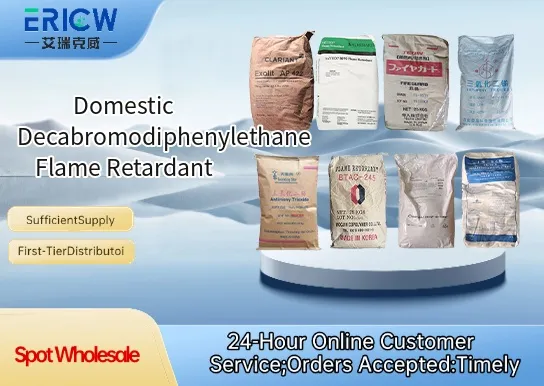
High bromine content (≥82.5%) ensures superior flame inhibition efficiency in polymer matrices.
Excellent thermal stability—decomposes above 340 °C, minimizing premature degradation during processing.
Low volatility and negligible migration, supporting long-term flame-retardant performance in end products.
Good compatibility with engineering thermoplastics including ABS, HIPS, and polyolefins.
RoHS-compliant formulation with no added antimony trioxide synergist required for many applications.
Flame-retarded acrylonitrile–butadiene–styrene (ABS) for electronics housings and business equipment.
High-impact polystyrene (HIPS) used in TV back covers, printer casings, and office automation devices.
Polypropylene (PP) compounds for automotive interior components meeting FMVSS 302 requirements.
Thermoplastic elastomer (TPE) blends requiring UL94 V-0 rating at thin-wall sections.
Electrical enclosures and junction boxes where halogenated flame retardancy is specified per IEC 60695 standards.
| Chemical Type | Aliphatic brominated flame retardant (ethane-based) |
| Product Form | Free-flowing white to off-white crystalline powder |
| Appearance | White crystalline powder, odorless |
| Bromine Content (by GC) | ≥82.5 wt% |
| Melting Point | 343–347 °C (DSC, onset) |
| Thermal Decomposition Onset (TGA, N₂) | ≥340 °C |
| Moisture Content (Karl Fischer) | ≤0.15 wt% |
| Solubility | Insoluble in water; soluble in chlorinated hydrocarbons and hot aromatic solvents |
Q1: What are the key advantages of decabromodiphenylethane over traditional decabromodiphenyl ether (deca-BDE)?
A: Decabromodiphenylethane offers superior thermal stability and lower volatility compared to deca-BDE, resulting in reduced risk of bromine loss during high-temperature polymer processing. It also demonstrates improved compatibility with common engineering thermoplastics and exhibits negligible migration tendency in finished articles under normal use conditions.
Q2: In which polymer systems is this flame retardant most commonly applied?
A: It is widely used in ABS, HIPS, and polyolefin-based compounds—especially where UL 94 V-0 or V-1 ratings are required. It performs well in both extrusion and injection molding processes and is frequently selected for electrical enclosures, appliance housings, and transportation interior components.
Q3: How does it perform in halogen-free synergistic systems?
A: While inherently brominated, decabromodiphenylethane can be effectively combined with antimony trioxide to achieve strong synergistic flame inhibition. It is not compatible with true halogen-free systems (e.g., phosphorus- or nitrogen-based retardants), as mixing may compromise char formation and gas-phase activity.
Q4: What handling precautions should be observed during industrial formulation?
A: As a fine organic powder, standard occupational hygiene practices apply: use local exhaust ventilation during handling, avoid inhalation of dust, and wear appropriate PPE including nitrile gloves and safety goggles. It is non-corrosive and stable under ambient storage conditions when kept dry and protected from direct sunlight.
Contact With Us:
E-mail: wangxingqiang@ericwchem.com
Have a Questions? Call Us:
Add:
Building A1, Jiete Industrial Park, Huangpu District, Guangzhou City, Guangdong Province, China