English
 Español
 tiếng việt
 русский
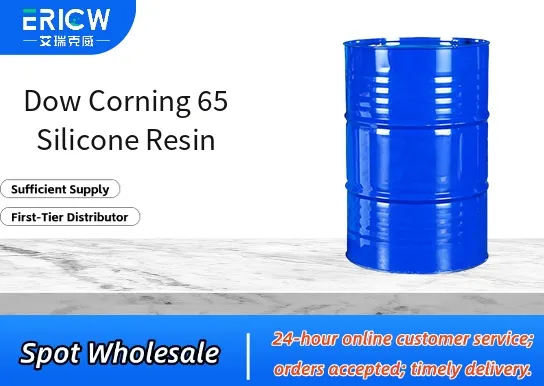
High thermal stability with continuous use up to 200 °C.
Excellent electrical insulation properties across wide temperature and frequency ranges.
Good adhesion to metals, glass, and cured silicone elastomers without primers.
Low volatility and minimal outgassing, suitable for vacuum and aerospace environments.
Reactive functionality enables crosslinking via condensation or addition cure mechanisms.
Encapsulants and potting compounds for high-reliability electronic components.
Dielectric coatings for transformers, motors, and ignition systems.
Binders in high-temperature insulating varnishes and magnet wire enamels.
Matrix resins for silicone-based composites used in aerospace structural parts.
Surface treatment agents for improving hydrophobicity and dielectric performance of substrates.
| Chemical Type | Methyl-phenyl silicone resin |
| Product Form | Clear to pale amber liquid |
| Appearance | Homogeneous, low-viscosity liquid |
| Primary Applications | Electrical insulation, protective coatings, high-temp binders |
| Key Features | Thermally stable, electrically insulating, solvent-dilutable |
| Benefits | Enhanced long-term reliability under thermal cycling and humidity |
| Solvent Compatibility | Compatible with aromatic and aliphatic hydrocarbons, ketones, and esters |
| Cure Mechanism | Condensation-curable (moisture-sensitive) or catalyst-assisted addition cure |
Q1: What is the primary function of Dow Corning® 65 Silicone Resin in coating and ink formulations?
A: Dow Corning® 65 is a methyl-phenyl silicone resin supplied as a solution in aromatic hydrocarbons. It is primarily used as a surface modifier to enhance mar resistance, slip, leveling, and substrate wetting—especially in high-performance industrial coatings, overprint varnishes, and gravure/flexographic inks.
Q2: Is Dow Corning® 65 compatible with common organic resin systems?
A: Yes, it demonstrates good compatibility with a broad range of thermoplastic and thermosetting resins—including acrylics, alkyds, polyesters, nitrocellulose, and epoxy systems—enabling its use in hybrid formulations without significant phase separation or haze formation under typical processing conditions.
Q3: How should Dow Corning® 65 be incorporated into a formulation to maximize performance?
A: It is typically added during the let-down stage, after pigment dispersion, under moderate agitation. Pre-dilution with a compatible solvent may improve uniform distribution. Final dosage depends on formulation requirements but generally ranges from 0.1% to 2% by weight of total solids.
Q4: Does Dow Corning® 65 require heat curing to develop its full functionality?
A: No. Its surface-active effects are largely realized upon solvent evaporation and film formation at ambient or low-temperature drying conditions. However, thermal treatment may further enhance crosslink density and durability in certain baked systems.
Contact With Us:
E-mail: wangxingqiang@ericwchem.com
Have a Questions? Call Us:
Add:
Building A1, Jiete Industrial Park, Huangpu District, Guangzhou City, Guangdong Province, China