English
 Español
 tiếng việt
 русский
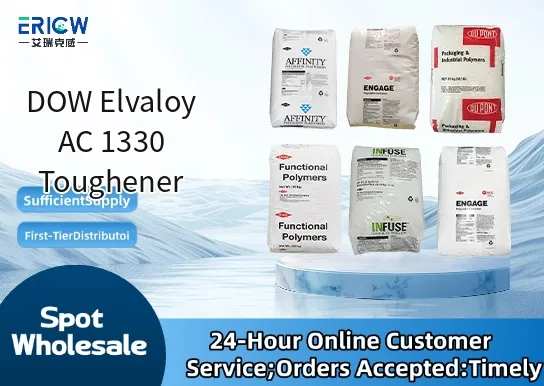
Enhanced impact resistance and ductility in rigid thermoplastic matrices, especially PVC and acrylic-based systems.
Excellent low-temperature toughness retention without compromising stiffness or heat deflection temperature.
Good compatibility and dispersion in chlorinated polyethylene (CPE), polyvinyl chloride (PVC), and methyl methacrylate (MMA) copolymers.
Non-migrating, permanently anchored toughening agent due to reactive acrylate functionality.
Enables thinner-gauge, lightweight parts while maintaining structural integrity and crash performance.
Automotive interior trim components requiring high impact strength and surface aesthetics.
Rigid PVC profiles for window frames and siding with improved weatherability and notch sensitivity resistance.
Medical device housings where sterilization resistance and dimensional stability are critical.
Architectural panels and signage substrates demanding UV stability and long-term toughness.
Consumer electronics enclosures requiring flame-retardant formulations with balanced mechanical properties.
| Chemical Type | Acrylate-based terpolymer (ethyl acrylate/methyl acrylate/vinyl acetate) |
| Product Form | Pellets |
| Appearance | Off-white to light tan free-flowing pellets |
| Primary Applications | Toughening modifier for rigid thermoplastics, especially PVC, CPE, and acrylics |
| Key Features | Reactive acrylate groups, non-migrating, excellent low-temperature impact performance |
| Benefits | Improved fracture resistance, reduced brittleness, enhanced processing stability |
| Density (g/cm³) | 1.02–1.05 (ASTM D792) |
| Melt Flow Rate (g/10 min, 190°C/2.16 kg) | 2–4 (ASTM D1238) |
Contact With Us:
E-mail: wangxingqiang@ericwchem.com
Have a Questions? Call Us:
Add:
Building A1, Jiete Industrial Park, Huangpu District, Guangzhou City, Guangdong Province, China