English
 Español
 tiếng việt
 русский
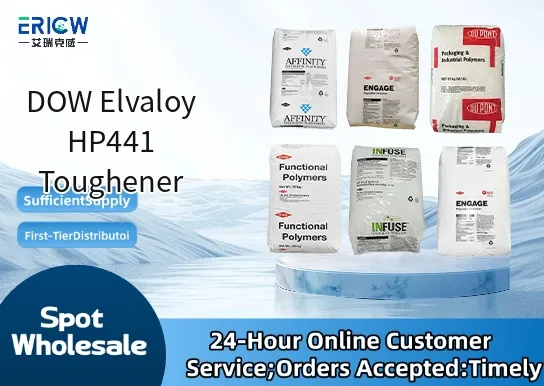
Enhances impact resistance and ductility in rigid thermoplastic matrices without compromising stiffness.
Provides excellent low-temperature toughness retention down to –40 °C.
Offers superior compatibility with polyolefins, PVC, and engineering thermoplastics.
Enables improved melt processability and reduced extrusion torque during compounding.
Delivers long-term UV and thermal stability when formulated with appropriate stabilizers.
Automotive interior and exterior trim components requiring dimensional stability and crash performance.
Rigid packaging for medical devices and consumer goods demanding puncture resistance and clarity.
Industrial piping systems where notch sensitivity and environmental stress cracking resistance are critical.
Electrical enclosures and housings requiring UL 94 HB flame-retardant base resin enhancement.
3D printing filaments based on ABS or PC blends seeking improved layer adhesion and fracture toughness.
| Chemical Type | Ethylene–methyl acrylate–glycidyl methacrylate terpolymer |
| Product Form | Pellets |
| Appearance | Off-white to light tan, free-flowing pellets |
| Primary Applications | Toughening modifier for thermoplastics (e.g., PP, PVC, ABS, PC) |
| Key Features | Reactive functionality (epoxy groups), low-melt viscosity, high grafting efficiency |
| Benefits | Improved impact strength, enhanced interfacial adhesion, reduced brittleness in filled systems |
| Storage Conditions | Store in original unopened packaging at ≤30 °C; protect from moisture and direct sunlight |
| Processing Temperature Range | 160–220 °C (recommended for extrusion and injection molding) |
Contact With Us:
E-mail: wangxingqiang@ericwchem.com
Have a Questions? Call Us:
Add:
Building A1, Jiete Industrial Park, Huangpu District, Guangzhou City, Guangdong Province, China