English
 Español
 tiếng việt
 русский
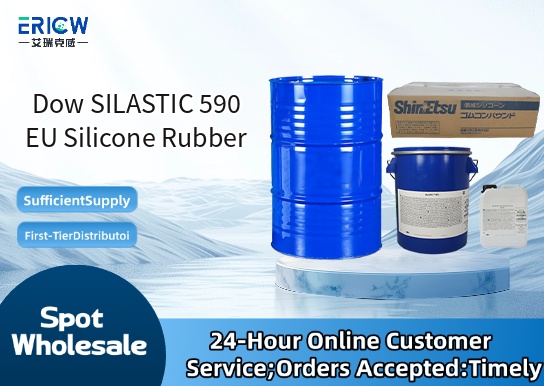
Platinum-cured, two-part addition-cure silicone rubber offering excellent dimensional stability and low compression set.
Meets EU Regulation (EC) No. 1935/2004 for food contact materials and is compliant with FDA 21 CFR §177.2600 for repeated-use food applications.
High tear strength and outstanding flexibility across a wide temperature range (–60 °C to +200 °C).
Low viscosity before cure enables easy dispensing, degassing, and mold filling—even in complex geometries.
Excellent electrical insulation properties and resistance to aging, ozone, and UV exposure.
Food-grade gaskets and seals for industrial processing equipment and packaging machinery.
Medical device components requiring biocompatibility and sterilization resilience (e.g., autoclave, gamma, EtO).
High-reliability encapsulation and potting of electronic sensors and control modules in demanding environments.
Custom molded parts for household appliances, including oven door seals and steam-resistant interfaces.
Prototyping and low-volume production of precision elastomeric parts in automotive and white-goods OEMs.
| Chemical Type | Platinum-catalyzed addition-cure silicone rubber |
| Product Form | Two-component liquid (Part A: base; Part B: catalyst) |
| Appearance | Translucent, viscous liquid (Part A); translucent, low-viscosity liquid (Part B) |
| Mix Ratio (A:B) by Weight | 10:1 |
| Cure Temperature Range | Room temperature (slow cure) or elevated temperature (e.g., 80–120 °C for accelerated cure) |
| Shore A Hardness (Cured) | 50 ± 3 |
| Tensile Strength (Cured) | ≥ 5.0 MPa |
| Elongation at Break (Cured) | ≥ 350% |
Contact With Us:
E-mail: wangxingqiang@ericwchem.com
Have a Questions? Call Us:
Add:
Building A1, Jiete Industrial Park, Huangpu District, Guangzhou City, Guangdong Province, China