English
 Español
 tiếng việt
 русский
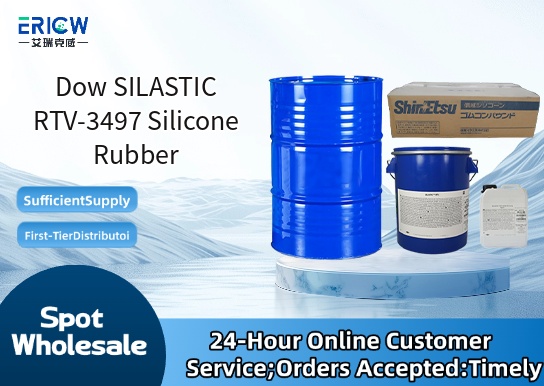
Two-component, addition-cure silicone rubber offering excellent thermal stability and long-term reliability.
Low viscosity before cure enables easy mixing, degassing, and flow into intricate molds or assemblies.
Fast room-temperature or elevated-temperature cure profile supports high-throughput manufacturing.
Exceptional electrical insulation properties with stable dielectric strength across wide temperature and humidity ranges.
Low compression set and high elasticity ensure consistent sealing performance under repeated mechanical stress.
Encapsulation and potting of power electronics, including IGBT modules and EV inverter components.
Sealing and gasketing for automotive sensors, battery management systems (BMS), and under-hood electronics.
Thermal interface materials (TIM) in LED lighting assemblies requiring long-life thermal management.
Protective coatings for aerospace avionics and flight-critical control units exposed to extreme environments.
Molded insulators and bushings in renewable energy inverters and solar junction boxes.
| Chemical Type | Platinum-catalyzed addition-cure silicone rubber |
| Product Form | Two-part liquid (Part A: base; Part B: catalyst) |
| Appearance (Uncured) | Clear to translucent viscous liquids |
| Base-to-Catalyst Mix Ratio (by weight) | 10:1 |
| Cure Schedule (Typical) | 24 h at 25°C or 2 h at 100°C |
| Hardness (Shore A, ASTM D2240) | 40–45 |
| Density (g/cm³, ASTM D1475) | 1.12–1.16 |
| Key Features | Low shrinkage, no by-products, excellent adhesion to metals and primed plastics |
Contact With Us:
E-mail: wangxingqiang@ericwchem.com
Have a Questions? Call Us:
Add:
Building A1, Jiete Industrial Park, Huangpu District, Guangzhou City, Guangdong Province, China