English
 Español
 tiếng việt
 русский
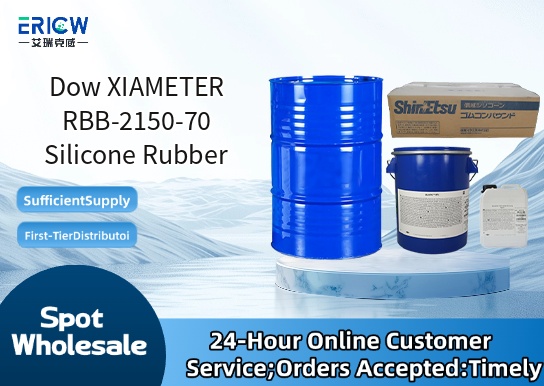
High-consistency, two-part addition-cure silicone rubber with excellent processability in compression and transfer molding.
Offers outstanding thermal stability and long-term performance across a wide temperature range (–60 °C to +200 °C).
Low compression set ensures reliable sealing and resilience after prolonged stress or elevated temperature exposure.
Meets biocompatibility requirements per ISO 10993-5 and USP Class VI for medical-grade applications.
Consistent batch-to-batch quality with controlled rheology and minimal volatile content post-cure.
Medical device components including seals, gaskets, tubing connectors, and wearable sensor housings.
Automotive under-hood sealing parts requiring resistance to oil, coolant, and thermal cycling.
Consumer electronics interface pads, button domes, and environmental protection gaskets.
Industrial fluid handling components such as diaphragms, pump valves, and filtration seals.
Food-contact compliant parts for processing equipment where FDA 21 CFR 177.2600 compliance is required.
| Chemical Type | Platinum-catalyzed addition-cure silicone elastomer |
| Product Form | Two-part liquid system (Part A: base polymer; Part B: platinum catalyst) |
| Appearance | Opaque, viscous liquid (Part A); translucent, low-viscosity liquid (Part B) |
| Primary Applications | Compression molding, transfer molding, and injection molding of high-performance elastomeric parts |
| Key Features | High tear strength, low compression set, excellent dimensional stability |
| Benefits | Reduced post-cure time, minimal shrinkage, and consistent mechanical properties |
| Regulatory Compliance | ISO 10993-5 (cytotoxicity), USP Class VI, FDA 21 CFR 177.2600 (food contact) |
| Curing System | Addition cure (no by-products); inhibited at room temperature, activated above 80 °C |
Contact With Us:
E-mail: wangxingqiang@ericwchem.com
Have a Questions? Call Us:
Add:
Building A1, Jiete Industrial Park, Huangpu District, Guangzhou City, Guangdong Province, China