English
 Español
 tiếng việt
 русский
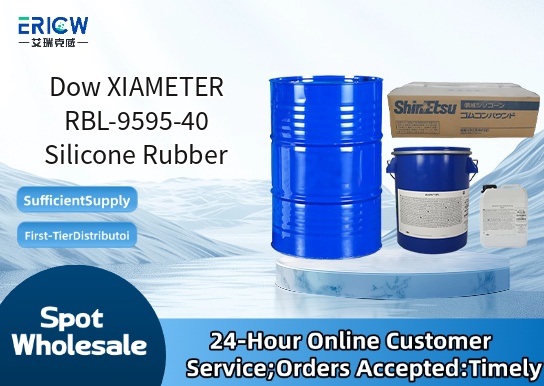
High-consistency, two-part addition-cure silicone rubber with excellent processability in compression and transfer molding.
Offers outstanding thermal stability and long-term performance across a wide temperature range (–60 °C to 200 °C).
Low compression set and superior resilience for dynamic sealing and repeated flexing applications.
Meets ISO 10993-10 for skin sensitization and USP Class VI requirements for biocompatibility.
Consistent batch-to-batch reproducibility and optimized viscosity balance for reliable mold filling and minimal air entrapment.
Medical device components including respiratory masks, tubing connectors, and wearable sensor housings.
Automotive fluid-handling seals and gaskets exposed to oils, coolants, and under-hood thermal cycling.
Consumer electronics enclosures requiring soft-touch feel, vibration damping, and environmental sealing.
Industrial automation parts such as pneumatic seals, diaphragms, and precision elastomeric actuators.
Food-contact compliant gaskets and seals for processing equipment (compliant with FDA 21 CFR 177.2600).
| Chemical Type | Platinum-catalyzed addition-cure silicone rubber |
| Product Form | Two-component liquid silicone rubber (Part A + Part B) |
| Appearance | Opaque, off-white viscous liquid (Part A); translucent, pale yellow liquid (Part B) |
| Base Polymer | High-molecular-weight vinyl-terminated polydimethylsiloxane |
| Cure System | Pt-catalyzed hydrosilylation (inhibitor-modulated) |
| Shore A Hardness (ASTM D2240) | 40 ± 2 |
| Tensile Strength (ASTM D412) | 8.5 MPa typical |
| Elongation at Break (ASTM D412) | 550% typical |
Contact With Us:
E-mail: wangxingqiang@ericwchem.com
Have a Questions? Call Us:
Add:
Building A1, Jiete Industrial Park, Huangpu District, Guangzhou City, Guangdong Province, China