English
 Español
 tiếng việt
 русский
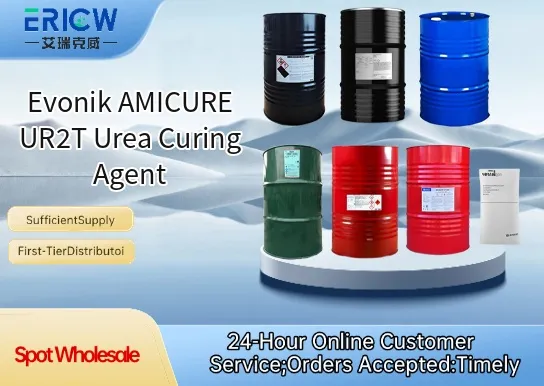
High reactivity with epoxy resins at ambient and elevated temperatures.
Enables fast gelation and short demolding times in structural adhesives and composites.
Provides excellent thermal stability and long-term performance in cured systems.
Low volatility and low skin sensitization potential compared to traditional amine hardeners.
Compatible with standard epoxy formulations without requiring solvents or modifiers.
Structural adhesives for automotive and aerospace bonding.
Electrical encapsulation compounds for power electronics and LED modules.
Wind turbine blade matrix resins and composite tooling materials.
High-performance coatings for industrial flooring and corrosion protection.
Pultrusion and filament winding resins for reinforced polymer profiles.
| Chemical Type | Urea-based latent curing agent |
| Product Form | Free-flowing white granular solid |
| Appearance | Off-white to light beige granules |
| Primary Applications | Epoxy resin curing for adhesives, composites, and encapsulants |
| Key Features | Latent reactivity, low dust generation, high thermal stability |
| Benefits | Extended pot life, rapid cure onset, improved worker safety |
| Storage Conditions | Store in original sealed container at 5–25 °C, protect from moisture |
| Shelf Life | 24 months from date of manufacture under recommended storage |
Q1: What is the primary function of AMICURE UR2T in epoxy systems?
A: AMICURE UR2T is a latent urea-based curing agent designed to provide controlled reactivity and extended pot life for epoxy resins, enabling stable one-component formulations that cure efficiently upon heating.
Q2: At what temperature range does AMICURE UR2T typically initiate and complete cure?
A: Cure initiation generally begins above 120 °C, with full crosslinking achieved within typical industrial bake cycles ranging from 130 °C to 160 °C — exact profile depends on formulation thickness, thermal mass, and desired mechanical development.
Q3: How does AMICURE UR2T compare to conventional dicyandiamide (DICY) in terms of storage stability and handling?
A: AMICURE UR2T offers improved physical stability and reduced dust generation compared to DICY, with lower hygroscopicity and consistent particle morphology — supporting reliable metering and long-term shelf life under dry, ambient conditions.
Q4: Which epoxy resin types are most commonly paired with AMICURE UR2T?
A: It is widely used with standard bisphenol-A and bisphenol-F liquid and solid epoxy resins, as well as novolac epoxies — particularly where balanced latency, low volatility, and good adhesion to metals or composites are required.
Q5: Is AMICURE UR2T suitable for applications requiring low volatile organic compound (VOC) emissions?
A: Yes — as a non-volatile, solid curing agent with negligible vapor pressure at room temperature, AMICURE UR2T supports low-VOC and high-solids epoxy formulations compliant with modern industrial emission guidelines.
Contact With Us:
E-mail: wangxingqiang@ericwchem.com
Have a Questions? Call Us:
Add:
Building A1, Jiete Industrial Park, Huangpu District, Guangzhou City, Guangdong Province, China