English
 Español
 tiếng việt
 русский
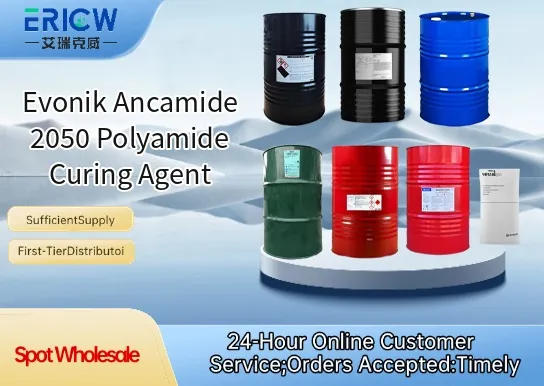
Flexible and tough cured epoxy systems with excellent impact resistance.
Low viscosity enables easy handling, good flow, and improved wetting of fillers and reinforcements.
Extended pot life at ambient temperature for improved processing window in large-part or multi-component applications.
Good adhesion to metals, concrete, and composite substrates without aggressive surface pretreatment.
Low odor and low volatility formulation supports safer industrial handling and compliance with VOC regulations.
Structural adhesives for automotive and transportation assembly.
Epoxy-based flooring and industrial coatings for warehouses and manufacturing facilities.
Electrical encapsulation and potting compounds for transformers and power electronics.
Composite matrix resins for wind turbine blades and aerospace secondary structures.
Repair mortars and polymer-modified grouts for civil engineering infrastructure.
| Chemical Type | Polyamide adduct |
| Product Form | Liquid |
| Appearance | Amber to light brown transparent liquid |
| Viscosity (25 °C) | 1,800–2,500 mPa·s |
| Amine Value | 230–260 mg KOH/g |
| Reactivity Profile | Medium-reactive polyamide curing agent |
| Primary Applications | Epoxy resin curing for adhesives, coatings, and composites |
| Key Features | Flexibility, low-temperature cure capability, low exotherm |
Q1: What types of epoxy resins is Ancamide 2050 compatible with?
A: Ancamide 2050 is designed for use with standard liquid and solid bisphenol-A and bisphenol-F based epoxy resins, as well as many novolac and cycloaliphatic epoxies. Compatibility should be confirmed experimentally for specialty or highly modified resin systems.
Q2: How does Ancamide 2050 compare to conventional polyamide curing agents in terms of pot life and cure speed?
A: Ancamide 2050 offers an extended pot life at ambient temperatures compared to many fast-reacting polyamides, while still enabling efficient room-temperature or elevated-temperature curing. Its reactivity profile supports good processing flexibility without sacrificing final crosslink density.
Q3: Is Ancamide 2050 suitable for coatings requiring high chemical resistance and adhesion to damp or contaminated substrates?
A: Yes — Ancamide 2050 contributes to excellent adhesion on steel, concrete, and other industrial substrates, including under moderately humid or minimally prepared conditions. The cured epoxy system typically exhibits strong resistance to water, alkalis, and many solvents, making it well-suited for protective coating applications.
Q4: What safety and handling precautions are recommended for Ancamide 2050?
A: As with all amine-based curing agents, Ancamide 2050 may cause skin and eye irritation and sensitization upon repeated exposure. Users should wear appropriate PPE—including nitrile gloves, safety goggles, and respiratory protection when handling mists or dust—and ensure adequate ventilation during mixing and application.
Contact With Us:
E-mail: wangxingqiang@ericwchem.com
Have a Questions? Call Us:
Add:
Building A1, Jiete Industrial Park, Huangpu District, Guangzhou City, Guangdong Province, China