English
 Español
 tiếng việt
 русский
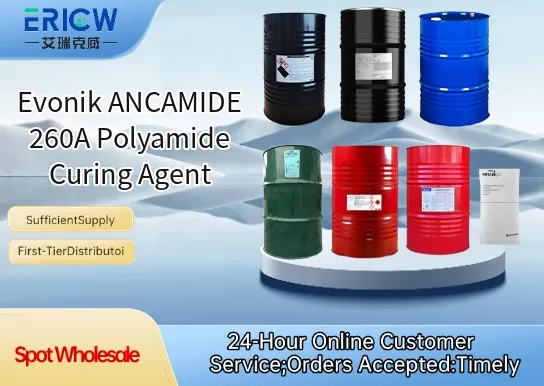
Low-viscosity liquid polyamide offering excellent compatibility with standard epoxy resins.
Enables ambient-temperature curing with good pot life and extended working time.
Delivers high flexibility, impact resistance, and adhesion to diverse substrates including metals and concrete.
Provides improved chemical resistance—particularly to alkalis, salts, and mild solvents—after full cure.
Free of volatile organic compounds (VOC-free), supporting sustainable coating and adhesive formulations.
Industrial maintenance coatings for steel structures and pipelines.
Concrete floor coatings and protective overlays in commercial and industrial facilities.
Two-component epoxy adhesives for metal-to-metal and metal-to-composite bonding.
Marine and offshore protective coatings requiring corrosion resistance and flexibility.
Electrical encapsulation and potting compounds where toughness and dielectric stability are critical.
| Chemical Type | Polyamide adduct |
| Product Form | Liquid |
| Appearance | Amber to light brown, clear to slightly hazy liquid |
| Amine Value | 220–250 mg KOH/g |
| Viscosity (25 °C) | 1,500–3,000 mPa·s |
| Density (20 °C) | 0.94–0.97 g/cm³ |
| Primary Applications | Epoxy resin curing agent for coatings, adhesives, and composites |
| Key Features | Ambient-cure capability, low VOC, flexible cured film, substrate versatility |
Q1: What is the primary function of ANCAMIDE 260A in epoxy systems?
A: ANCAMIDE 260A is a polyamide-based curing agent designed to react with epoxy resins, forming crosslinked thermoset networks. It provides good flexibility, chemical resistance, and adhesion—particularly suited for coatings, adhesives, and flooring applications where ambient-cure performance and toughness are required.
Q2: Is ANCAMIDE 260A suitable for high-humidity or damp-surface applications?
A: Yes, ANCAMIDE 260A exhibits relatively good moisture tolerance compared to many amine-based hardeners, making it well-suited for applications where substrate moisture or ambient humidity may be challenging—such as concrete primers and industrial maintenance coatings.
Q3: How does ANCAMIDE 260A compare to conventional aliphatic polyamide hardeners in terms of pot life and film formation?
A: ANCAMIDE 260A typically offers an extended working time (pot life) at ambient temperatures while still enabling efficient film formation and full cure development over several days. Its molecular design balances reactivity and handling, supporting consistent application and reduced risk of premature gelation in formulated systems.
Q4: Can ANCAMIDE 260A be used in food-contact or potable water applications?
A: ANCAMIDE 260A is not pre-qualified for direct food-contact or potable water applications under major regulatory frameworks. Formulators must conduct full system-level compliance testing—including extraction studies and regulatory review—to determine suitability for such sensitive end uses.
Contact With Us:
E-mail: wangxingqiang@ericwchem.com
Have a Questions? Call Us:
Add:
Building A1, Jiete Industrial Park, Huangpu District, Guangzhou City, Guangdong Province, China