English
 Español
 tiếng việt
 русский
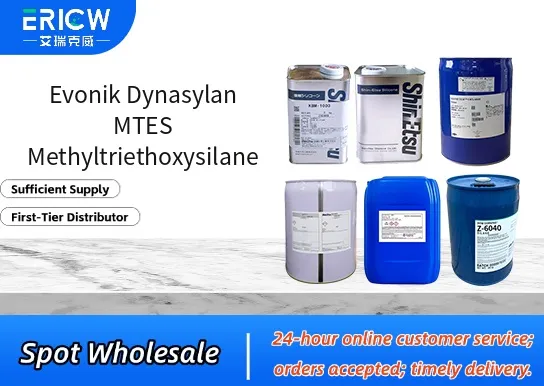
Highly reactive organosilane with three hydrolysable ethoxy groups and one non-hydrolysable methyl group.
Enables controlled surface modification of inorganic substrates such as glass, silica, and metal oxides.
Offers excellent compatibility with organic polymers and resin systems including epoxies, polyurethanes, and acrylics.
Low viscosity liquid ensures easy handling, precise metering, and homogeneous dispersion in formulations.
Hydrolysis-condensation reactivity supports formation of stable siloxane networks under mild curing conditions.
Adhesion promoters in automotive sealants and structural bonding agents.
Surface treatment agent for mineral fillers and pigments in high-performance composites.
Coupling agent in silicone-modified construction mortars and grouts.
Functional additive in water-repellent impregnation systems for concrete and natural stone.
Pre-treatment component for glass fiber sizing formulations to enhance polymer matrix adhesion.
| Chemical Type | Organofunctional alkoxysilane |
| Product Form | Clear, colorless to pale yellow liquid |
| Appearance | Homogeneous, mobile liquid at 20 °C |
| Molecular Formula | C7H18O3Si |
| Molecular Weight | 178.3 g/mol |
| Density (20 °C) | 0.93–0.95 g/cm³ |
| Refractive Index (20 °C) | 1.386–1.392 |
| Flash Point (PMCC) | 45–48 °C |
Contact With Us:
E-mail: wangxingqiang@ericwchem.com
Have a Questions? Call Us:
Add:
Building A1, Jiete Industrial Park, Huangpu District, Guangzhou City, Guangdong Province, China