English
 Español
 tiếng việt
 русский
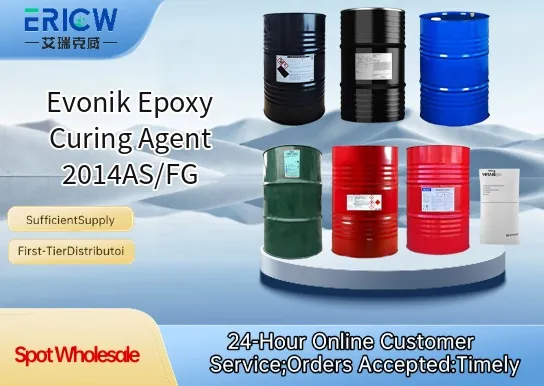
Low-viscosity liquid amine-based curing agent enabling excellent processability and easy metering/mixing.
Provides balanced reactivity—faster than conventional DICY systems but with extended pot life for industrial processing.
Delivers high glass transition temperature (Tg) and superior mechanical properties in cured epoxy networks.
Offers improved chemical resistance, particularly to hydrolysis and weak acids, enhancing long-term durability.
Designed for compatibility with standard bisphenol-A and bisphenol-F epoxy resins without requiring solvents or modifiers.
Electrical encapsulation and potting compounds for power electronics and EV battery modules.
High-performance composite matrices in wind turbine blade adhesives and structural aerospace components.
Industrial flooring and heavy-duty protective coatings requiring rapid turnaround and chemical resilience.
Adhesives for metal-to-metal and metal-to-composite bonding in automotive and rail transportation.
Tooling and casting resins where dimensional stability and low exotherm are critical.
| Chemical Type | Aromatic amine adduct |
| Product Form | Clear to pale yellow liquid |
| Appearance | Homogeneous, free of sediment or haze |
| Primary Applications | Structural adhesives, composites, electrical encapsulation, protective coatings |
| Key Features | Low viscosity, moderate reactivity, high Tg, hydrolytic stability |
| Benefits | Improved processing safety, enhanced thermal performance, reduced post-cure requirements |
| Storage Stability | ≥12 months at 25 °C in original sealed container |
| Compatibility | Standard DGEBA and DGEBF epoxy resins |
Q1: What is the primary chemical class of Evonik Epoxy Curing Agent 2014AS/FG?
A: 2014AS/FG is a modified aliphatic amine-based curing agent, specifically engineered to provide balanced reactivity, low volatility, and improved compatibility with standard epoxy resins.
Q2: Is 2014AS/FG suitable for applications requiring low-temperature cure?
A: Yes — it is formulated to enable efficient curing at ambient to moderately elevated temperatures (e.g., 15–40 °C), making it well-suited for coatings, adhesives, and composites where oven curing is not feasible.
Q3: How does 2014AS/FG compare to conventional amine hardeners in terms of handling safety?
A: It exhibits reduced volatility and lower skin sensitization potential compared to many unmodified aliphatic amines, supporting safer industrial handling — though appropriate personal protective equipment and workplace ventilation remain essential.
Q4: Can 2014AS/FG be used in food-contact or potable water applications?
A: While 2014AS/FG is designed for high-performance industrial systems, its suitability for regulated end uses depends on full formulation compliance and final regulatory evaluation — Evonik does not pre-certify individual components for such applications.
Contact With Us:
E-mail: wangxingqiang@ericwchem.com
Have a Questions? Call Us:
Add:
Building A1, Jiete Industrial Park, Huangpu District, Guangzhou City, Guangdong Province, China