English
 Español
 tiếng việt
 русский
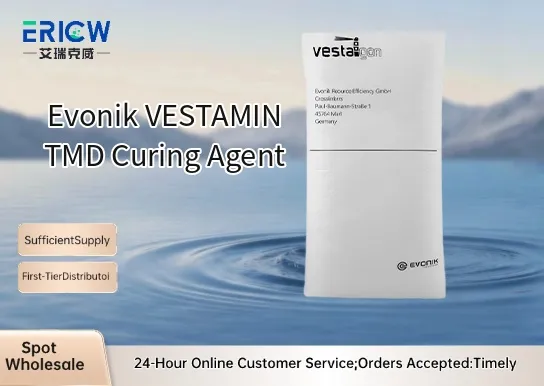
High reactivity with epoxy resins, enabling rapid cure at ambient or slightly elevated temperatures.
Excellent chemical resistance post-cure, particularly against solvents, alkalis, and mild acids.
Low viscosity and good compatibility with standard epoxy systems, facilitating easy handling and homogeneous mixing.
Improved flexibility and impact resistance in cured epoxy networks compared to conventional aromatic amines.
Reduced volatility and amine odor versus traditional aliphatic curing agents—enhancing workplace safety and operator comfort.
High-performance industrial floor coatings requiring fast return-to-service and abrasion resistance.
Structural adhesives for metal, composites, and concrete bonding in automotive and wind energy sectors.
Electrical encapsulation and potting compounds where thermal stability and dielectric integrity are critical.
Marine and offshore protective coatings demanding corrosion protection and long-term durability.
Repair mortars and grouts for infrastructure rehabilitation under time-sensitive project schedules.
| Chemical Type | Tertiary amine-modified aliphatic polyamine |
| Product Form | Liquid |
| Appearance | Pale yellow to light amber, clear liquid |
| Primary Applications | Epoxy resin curing agent for coatings, adhesives, and composites |
| Key Features | Ambient-curable, low odor, flexible network formation |
| Benefits | Fast throughput, improved toughness, reduced VOC handling concerns |
| Storage Stability | At least 12 months in original sealed container at 5–25 °C |
| Reactivity Profile | Compatible with DGEBA and novolac epoxy resins; stoichiometric ratio typically 0.8–1.1 amine hydrogen equivalents per epoxy equivalent |
Contact With Us:
E-mail: wangxingqiang@ericwchem.com
Have a Questions? Call Us:
Add:
Building A1, Jiete Industrial Park, Huangpu District, Guangzhou City, Guangdong Province, China