English
 Español
 tiếng việt
 русский
Excellent low-temperature flexibility retention in PVC and other polar polymers.
Superior hydrolytic stability compared to conventional phthalate and adipate esters.
Low volatility and high migration resistance, supporting long-term performance in demanding applications.
Good compatibility with rigid and flexible PVC, chlorinated polyethylene (CPE), and nitrile rubber (NBR).
Non-phthalate formulation compliant with major global regulatory frameworks for sensitive end uses.
Wire and cable insulation and jacketing requiring UL/CSA compliance and cold-weather performance.
Automotive interior components including dashboards, door trims, and under-hood seals.
Medical tubing and fluid contact devices where extractables and biocompatibility are critical.
Industrial hoses, gaskets, and seals exposed to moisture, temperature cycling, or mechanical stress.
High-performance flooring and wall coverings requiring durability and low fogging.
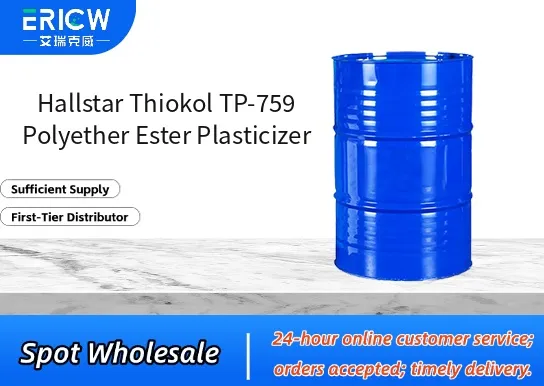
| Chemical Type | Polyether ester (non-phthalate) |
| Product Form | Clear, light-yellow liquid |
| Appearance | Homogeneous, free from visible particulates or haze |
| Primary Applications | PVC, CPE, NBR, thermoplastic elastomers (TPEs) |
| Key Features | Hydrolysis-resistant, low volatility, excellent low-temp flexibility |
| Benefits | Extended service life, reduced leaching, improved regulatory acceptance |
| Density (25°C) | Approx. 1.02–1.04 g/cm³ |
| Flash Point (COC) | ≥ 220°C |
Contact With Us:
E-mail: wangxingqiang@ericwchem.com
Have a Questions? Call Us:
Add:
Building A1, Jiete Industrial Park, Huangpu District, Guangzhou City, Guangdong Province, China