English
 Español
 tiếng việt
 русский
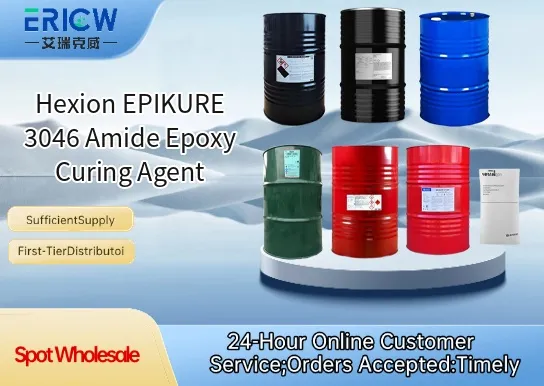
Highly flexible amide-based curing agent offering extended pot life and low exotherm for thick-section casting.
Provides excellent adhesion to diverse substrates including metals, concrete, and composite surfaces.
Delivers good chemical resistance—particularly to alkalis, solvents, and mild acids—after full cure.
Enables ambient-temperature cure with acceptable physical properties; also compatible with elevated temperature post-cure for enhanced performance.
Low volatility and non-hazardous classification under standard transport regulations (non-ADR, non-IMDG Class 9).
Structural adhesive formulations for transportation and industrial assembly.
Casting and encapsulation of electrical and electronic components requiring thermal stability and dielectric integrity.
Flooring and protective coatings for industrial concrete surfaces in manufacturing and warehousing facilities.
Repair mortars and grouts for civil infrastructure maintenance and rehabilitation projects.
| Chemical Type | Aliphatic polyamide |
| Product Form | Liquid |
| Appearance | Amber to light brown viscous liquid |
| Primary Applications | Structural adhesives, castings, coatings, mortars |
| Key Features | Low exotherm, ambient cure capability, good flexibility, substrate adhesion |
| Benefits | Reduced thermal stress in thick sections, ease of processing, broad compatibility with DGEBA resins |
| Storage Stability | 12 months in original unopened container at 15–25°C |
| Recommended Mix Ratio (by weight) with EPON™ 828 | 100 : 45–55 |
Q1: What is the primary chemical class and functional role of EPIKURE 3046?
A: EPIKURE 3046 is an amide-based epoxy curing agent, specifically designed to react with epoxide groups in resins such as DGEBA. It functions as a latent or moderately reactive hardener, offering improved pot life and controlled cure profile compared to highly reactive amines.
Q2: How does EPIKURE 3046 compare to conventional aliphatic amines in terms of handling and safety?
A: As an amide derivative, EPIKURE 3046 exhibits significantly lower volatility and reduced skin sensitization potential relative to primary aliphatic amines. It has milder odor and improved handling characteristics, making it suitable for applications where occupational exposure control is a priority.
Q3: What types of epoxy systems is EPIKURE 3046 typically formulated into?
A: It is commonly used in high-performance coating, adhesive, and composite formulations—especially where balanced cure speed, flexibility, and chemical resistance are required. It performs well in solventborne and high-solids epoxy systems, and may be blended with other hardeners to tailor reactivity and film properties.
Q4: Is EPIKURE 3046 compatible with common epoxy resins and modifiers?
A: Yes—it demonstrates broad compatibility with standard bisphenol-A and bisphenol-F epoxy resins, as well as with reactive diluents and flexibilizers. Compatibility with fillers, pigments, and rheology modifiers is generally good, though formulation-specific testing is recommended to confirm stability and performance.
Q5: What are typical storage and handling recommendations for this product?
A: Store in tightly sealed containers under dry, cool conditions, away from moisture, strong oxidizers, and direct sunlight. Prolonged exposure to humidity may affect reactivity. Always follow Hexion’s Safety Data Sheet for safe handling, personal protective equipment, and disposal guidance.
Contact With Us:
E-mail: wangxingqiang@ericwchem.com
Have a Questions? Call Us:
Add:
Building A1, Jiete Industrial Park, Huangpu District, Guangzhou City, Guangdong Province, China