English
 Español
 tiếng việt
 русский
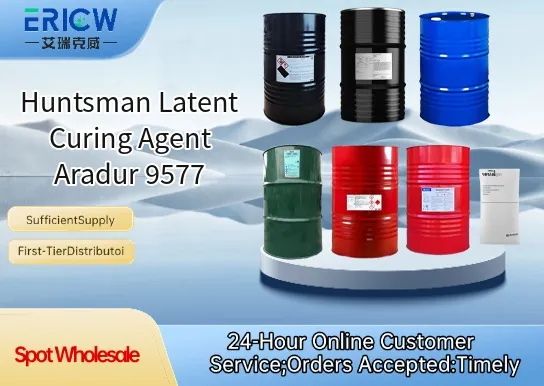
Latent at room temperature, enabling extended pot life and improved processing window for epoxy formulations.
Activates rapidly at elevated temperatures (typically >120 °C), delivering efficient and consistent cure kinetics.
Halogen-free formulation, supporting compliance with environmental and regulatory requirements for electronics and aerospace.
Excellent compatibility with standard bisphenol-A and bisphenol-F epoxy resins.
Delivers high glass transition temperature (Tg) and robust thermal-mechanical performance in cured systems.
Encapsulants and underfills for semiconductor packaging and microelectronics.
Structural adhesives for aerospace composite bonding and metal-to-composite joining.
Prepregs and infusion resins for high-performance wind turbine blades and automotive composites.
Electrical insulation materials requiring low ionic contamination and high dielectric strength.
High-reliability potting compounds for power electronics and LED modules.
| Chemical Type | Dicyandiamide-based latent accelerator system |
| Product Form | Free-flowing white to off-white crystalline powder |
| Appearance | Crystalline solid, free of visible impurities |
| Primary Applications | Epoxy encapsulation, structural adhesives, prepregs, electrical insulation |
| Key Features | Room-temperature latency, thermally activated cure, halogen-free |
| Storage Stability | Stable ≥12 months at 25 °C in sealed container |
| Recommended Cure Schedule | 150 °C for 60–90 minutes (varies by resin system) |
| Handling Precautions | Use in well-ventilated area; avoid inhalation of dust and skin contact |
Q1: What is the primary function of Aradur 9577 in epoxy resin systems?
A: Aradur 9577 is a latent curing agent designed to provide extended pot life at ambient temperatures while enabling rapid, efficient cure upon thermal activation—making it especially suitable for one-component (1K) epoxy formulations requiring storage stability and controlled processing.
Q2: At what temperature range does Aradur 9577 typically initiate and complete cure?
A: Cure initiation generally begins above 120 °C, with full crosslinking achieved within typical industrial bake cycles ranging from 130 °C to 160 °C—duration and final properties depend on formulation, part geometry, and heating profile.
Q3: Is Aradur 9577 compatible with standard bisphenol-A and bisphenol-F epoxy resins?
A: Yes, Aradur 9577 demonstrates broad compatibility with common liquid and solid epoxy resins, including DGEBA and DGEBF types, and is frequently used in powder coatings, encapsulants, and adhesives where latency and clean thermal cure are critical.
Q4: How should Aradur 9577 be handled and stored to maintain its latent performance?
A: Store in original sealed containers under dry, cool conditions (preferably below 25 °C and protected from moisture). Avoid prolonged exposure to humidity or elevated ambient temperatures prior to use, as this may reduce latency and compromise shelf life.
Q5: Does Aradur 9577 require post-cure to achieve optimal mechanical or chemical resistance?
A: While many applications achieve satisfactory performance after the primary thermal cure cycle, enhanced crosslink density—and thus improved chemical resistance, hardness, and thermal stability—can often be realized through a controlled post-cure step at elevated temperature, depending on end-use requirements.
Contact With Us:
E-mail: wangxingqiang@ericwchem.com
Have a Questions? Call Us:
Add:
Building A1, Jiete Industrial Park, Huangpu District, Guangzhou City, Guangdong Province, China