English
 Español
 tiếng việt
 русский
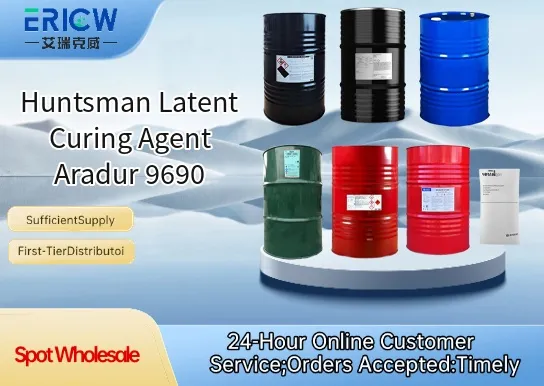
Latent reactivity enables extended pot life and ambient storage stability prior to thermal activation.
High-temperature curing profile (typically activated above 120 °C) ensures precise process control and low exotherm during handling.
Delivers excellent mechanical properties, including high glass transition temperature (Tg) and dimensional stability in cured epoxy systems.
Low volatility and minimal odor support safer industrial handling and compliance with occupational health guidelines.
Compatible with standard diglycidyl ether of bisphenol-A (DGEBA) and multifunctional epoxy resins.
Aerospace composite tooling and mandrels requiring high-temperature performance and low residual stress.
Electrical encapsulation and insulating components for power electronics and transformers.
High-performance adhesives for structural bonding in automotive and rail transportation.
Precision casting resins used in investment molding and prototyping applications.
Prepregs and filament-wound composites where controlled cure kinetics and shelf-life are critical.
| Chemical Type | Dicyandiamide-based latent accelerator system |
| Product Form | Free-flowing white crystalline powder |
| Appearance | White to off-white granular solid |
| Primary Applications | Epoxy resin curing agent for high-performance thermosets |
| Key Features | Latent, thermally activated, low dust generation |
| Benefits | Extended shelf life (>12 months at 25 °C), consistent cure response, low moisture sensitivity |
| Recommended Storage | Sealed container, dry conditions, below 30 °C |
| Handling Precautions | Use in well-ventilated areas; avoid inhalation of dust and skin contact |
Q1: What is the primary function of Aradur 9690 in epoxy systems?
A: Aradur 9690 is a latent curing agent designed to provide extended pot life at ambient temperatures while enabling rapid, efficient crosslinking upon thermal activation—making it especially suitable for one-component (1K) epoxy formulations requiring storage stability and controlled cure onset.
Q2: At what temperature does Aradur 9690 typically initiate curing?
A: Cure initiation generally begins above 120 °C, with full crosslinking achieved within practical timeframes at temperatures between 140 °C and 180 °C—exact profile depends on formulation, thermal mass, and desired performance balance between speed and final properties.
Q3: Is Aradur 9690 compatible with standard DGEBA-type epoxy resins?
A: Yes, Aradur 9690 demonstrates good compatibility with conventional diglycidyl ether of bisphenol-A (DGEBA) and related liquid or solid epoxy resins, and is commonly used in structural adhesives, powder coatings, and encapsulation compounds where latency and clean thermal cure are required.
Q4: How should Aradur 9690 be handled and stored to maintain its latent characteristics?
A: Store in original sealed containers under cool, dry conditions—ideally below 25 °C—and protect from moisture and prolonged exposure to elevated ambient temperatures. Avoid contamination with active catalysts or acidic/basic residues that may compromise latency.
Q5: What types of end-use applications benefit most from using Aradur 9690?
A: Applications demanding precise process control—including pre-impregnated composites (prepregs), heat-activated structural adhesives, high-performance powder coatings, and electronic encapsulants—leverage Aradur 9690’s reliable latency, sharp cure onset, and low volatility during processing.
Contact With Us:
E-mail: wangxingqiang@ericwchem.com
Have a Questions? Call Us:
Add:
Building A1, Jiete Industrial Park, Huangpu District, Guangzhou City, Guangdong Province, China