English
 Español
 tiếng việt
 русский
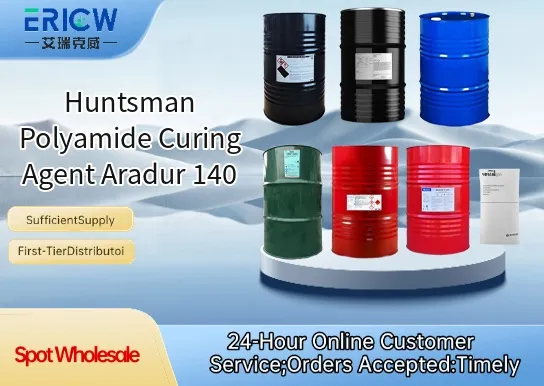
Low-viscosity liquid polyamide offering excellent compatibility with standard epoxy resins.
Enables room-temperature cure with good flexibility and impact resistance in final coatings.
Provides balanced pot life and gel time for reliable processing in industrial coating and adhesive applications.
Delivers superior adhesion to steel, aluminum, and concrete substrates.
Meets RoHS compliance requirements with no intentionally added heavy metals or restricted phthalates.
Industrial maintenance coatings for offshore and marine structures.
Epoxy-based floor coatings in warehouses, factories, and pharmaceutical cleanrooms.
Structural adhesives for metal-to-metal bonding in transportation equipment.
Repair mortars and grouts for civil engineering infrastructure projects.
Electrical encapsulation compounds requiring low exotherm and dimensional stability.
| Chemical Type | Polyamide adduct (modified aliphatic) |
| Product Form | Liquid |
| Appearance | Amber to light brown transparent liquid |
| Primary Applications | Epoxy resin curing agent for coatings, adhesives, and composites |
| Key Features | Room-temperature cure, flexible film formation, good chemical resistance |
| Benefits | Easy handling, low odor, extended working time at ambient conditions |
| Density (25°C) | Approx. 0.96–0.98 g/cm³ |
| Viscosity (25°C) | Approx. 300–600 mPa·s |
Q1: What is the primary function of Aradur 140 in epoxy systems?
A: Aradur 140 is a polyamide-based curing agent designed to react with epoxy resins, enabling crosslinking at ambient or slightly elevated temperatures. It delivers good flexibility, chemical resistance, and adhesion—particularly suited for protective coatings, flooring, and industrial maintenance applications.
Q2: Is Aradur 140 compatible with standard bisphenol A and bisphenol F epoxy resins?
A: Yes, Aradur 140 demonstrates broad compatibility with common liquid and solid bisphenol A- and F-type epoxy resins. Its formulation allows for flexible resin selection depending on desired pot life, film build, and final performance requirements.
Q3: How does humidity affect the cure performance of Aradur 140?
A: As a polyamide curing agent, Aradur 140 exhibits relatively good moisture tolerance compared to amine-based alternatives, making it suitable for application in moderate ambient humidity conditions. However, prolonged exposure to high humidity during early cure may impact surface dryness and final hardness development.
Q4: Can Aradur 140 be used in food-contact coating formulations?
A: Aradur 140 is not pre-qualified for direct food-contact applications. Formulators intending to use it in such systems must conduct full regulatory evaluation—including migration testing and compliance verification—based on the final cured formulation and applicable regional regulations.
Contact With Us:
E-mail: wangxingqiang@ericwchem.com
Have a Questions? Call Us:
Add:
Building A1, Jiete Industrial Park, Huangpu District, Guangzhou City, Guangdong Province, China