English
 Español
 tiếng việt
 русский
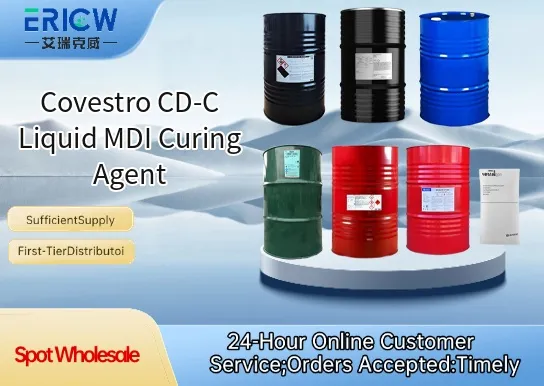
Low-viscosity liquid formulation for easy handling and precise metering in automated systems.
High reactivity with polyols, enabling rapid gelation and short demold times in thermoset processing.
Excellent hydrolytic stability compared to conventional pure MDI, reducing sensitivity to moisture during storage and processing.
Consistent batch-to-batch performance ensured by Covestro’s stringent quality control and ISO-certified manufacturing.
Compatible with a broad range of polyester and polyether polyols used in high-performance elastomer and coating applications.
Reaction injection molding (RIM) of automotive interior and exterior components.
Cast elastomer systems for industrial rollers, mining screens, and hydraulic seals.
High-solids polyurethane coatings for corrosion protection in infrastructure and marine environments.
Microcellular polyurethane foams for precision gasketing and vibration-damping applications.
Two-component polyurethane adhesives for demanding structural bonding in transportation and wind energy sectors.
| Chemical Type | Modified liquid MDI (diphenylmethane diisocyanate) |
| Product Form | Clear, amber-colored liquid |
| Appearance | Homogeneous, transparent liquid without sediment |
| NCO Content (wt %) | 27.5–28.5% |
| Viscosity at 25°C (mPa·s) | 150–250 |
| Specific Gravity (25°C) | 1.21–1.23 |
| Storage Stability (unopened, 25°C) | ≥12 months |
| Primary Applications | RIM, cast elastomers, high-performance coatings, structural adhesives |
Q1: What is the primary function of Covestro CD-C Liquid MDI Curing Agent in polyurethane systems?
A: CD-C is a liquid aromatic diisocyanate-based curing agent designed to react with hydroxyl-terminated prepolymers or resins—typically polyether or polyester polyols—to form crosslinked polyurethane networks. It enables rapid room-temperature or elevated-temperature cure, delivering enhanced hardness, chemical resistance, and mechanical integrity in final elastomeric or coating applications.
Q2: How does CD-C differ from conventional solid MDI or polymeric MDI in processing?
A: Unlike crystalline MDI or viscous polymeric MDI, CD-C is supplied as a stable, low-viscosity liquid at ambient temperature. This eliminates the need for heating or melting steps prior to dosing, improves metering accuracy and mixing homogeneity, and supports simplified handling in automated casting, spraying, or impregnation processes.
Q3: Is CD-C compatible with moisture-cure or one-component PU systems?
A: No—CD-C is intended exclusively for two-component (2K) polyurethane formulations where it serves as the reactive isocyanate component. It is not formulated for moisture-cure applications and must be protected from ambient humidity during storage and processing to prevent premature reaction or viscosity increase.
Q4: What are typical storage and shelf-life considerations for CD-C?
A: CD-C should be stored in tightly sealed containers under dry, inert atmosphere (e.g., nitrogen blanket), away from moisture, heat, and direct sunlight. Under recommended conditions, it typically maintains stability and reactivity for up to 12 months from date of manufacture. Always inspect for clarity and absence of sediment before use.
Contact With Us:
E-mail: wangxingqiang@ericwchem.com
Have a Questions? Call Us:
Add:
Building A1, Jiete Industrial Park, Huangpu District, Guangzhou City, Guangdong Province, China