English
 Español
 tiếng việt
 русский
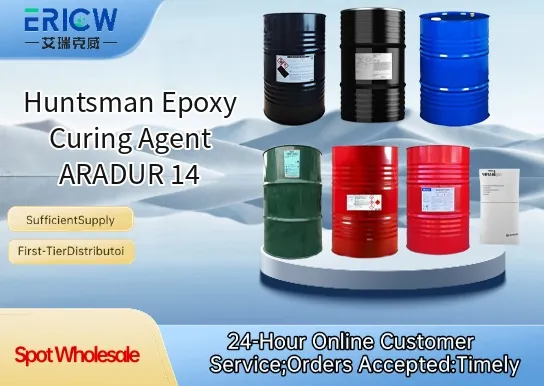
Fast-reacting aliphatic amine-based curing agent for ambient and elevated temperature cure.
Excellent chemical resistance, particularly to hydrolysis and alkalis after full cure.
Low viscosity enables easy handling, precise metering, and good wetting of reinforcements.
Good mechanical properties retention at elevated service temperatures up to 120 °C.
Compatible with standard epoxy resins including DGEBA and novolac types.
Aerospace composite tooling and mandrels.
High-performance wind turbine blade adhesives and structural pastes.
Electrical insulation systems for transformers and busbars.
Industrial flooring and heavy-duty protective coatings.
Structural bonding in transportation and rail applications.
| Chemical Type | Aliphatic polyamine |
| Product Form | Liquid |
| Appearance | Pale yellow to amber clear liquid |
| Primary Applications | Structural adhesives, composites, coatings, electrical encapsulation |
| Key Features | Ambient-cure capable, low exotherm, high Tg potential |
| Benefits | Improved productivity, reduced post-cure requirements, enhanced durability |
| Storage Stability | ≥12 months at 25 °C in sealed original container |
| Reactivity Profile | Medium reactivity (faster than conventional DETA, slower than highly reactive amines) |
Q1: What is the primary function of ARADUR 14 in epoxy systems?
A: ARADUR 14 is a latent, dicyandiamide-based curing agent designed to provide extended pot life at ambient temperature while enabling rapid, high-temperature cure—making it especially suitable for powder coatings, prepregs, and filament-wound composites where processing control and thermal efficiency are critical.
Q2: How does ARADUR 14 compare to standard dicyandiamide (DICY) in terms of dispersion and stability?
A: ARADUR 14 is a surface-treated, micronized form of dicyandiamide that offers improved dispersibility in epoxy resins and enhanced storage stability in formulated systems—reducing sedimentation risk and supporting more uniform cure performance compared to conventional DICY powders.
Q3: What types of epoxy resins is ARADUR 14 typically compatible with?
A: ARADUR 14 is broadly compatible with standard solid and liquid bisphenol-A and bisphenol-F epoxy resins, as well as novolac epoxies—particularly in applications requiring high glass transition temperature (Tg), good chemical resistance, and mechanical robustness after cure.
Q4: What is the typical activation temperature range for ARADUR 14?
A: Full reactivity generally initiates above 150 °C, with optimal cure profiles achieved between 160 °C and 180 °C—enabling compatibility with common industrial oven and autoclave processing conditions used in composite manufacturing and coating applications.
Contact With Us:
E-mail: wangxingqiang@ericwchem.com
Have a Questions? Call Us:
Add:
Building A1, Jiete Industrial Park, Huangpu District, Guangzhou City, Guangdong Province, China