English
 Español
 tiếng việt
 русский
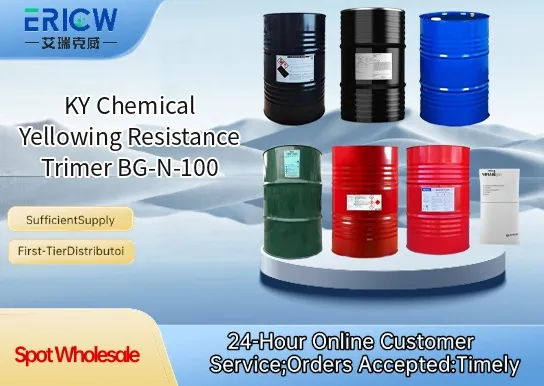
Highly effective yellowing inhibition for polyurethane and acrylic-based coatings under UV exposure and thermal aging.
Non-migrating, covalently bonded trimeric structure ensures long-term stability in polymer matrices.
Compatible with waterborne, solventborne, and high-solids coating systems without compromising film clarity or gloss.
Low volatility and negligible odor — meets stringent VOC and REACH compliance requirements.
Enhances color retention in white and pastel finishes exposed to indoor lighting and ambient heat.
Interior architectural coatings for ceilings, walls, and trim requiring long-term whiteness stability.
Automotive interior trim coatings (dashboards, door panels, consoles) subjected to dashboard-level thermal stress.
Textile finishing for high-end synthetic fabrics used in upholstery and contract furnishings.
Plastic additives for ABS, PC/ABS blends, and thermoplastic elastomers in consumer electronics housings.
Wood finishes and clear topcoats for premium furniture and cabinetry where UV-induced yellowing is critical.
| Chemical Type | Trimeric hindered amine light stabilizer (HALS) derivative |
| Product Form | Powder |
| Appearance | White to off-white free-flowing crystalline powder |
| Primary Applications | Coatings, plastics, and textile finishes requiring non-migrating yellowing resistance |
| Key Features | Thermally stable, non-basic, UV-absorber-free, hydrolytically robust |
| Benefits | Prevents photooxidative degradation; improves shelf life of formulated products; reduces rework in high-value finishes |
| Storage Conditions | Store in original sealed container at 5–30°C, protected from moisture and direct sunlight |
| Regulatory Status | REACH registered; RoHS compliant; no SVHCs above threshold |
Q1: What is the primary function of BG-N-100 in polymer systems?
A: BG-N-100 is a specialized trimeric additive designed to inhibit photo-oxidative yellowing, particularly in polyurethane, acrylic, and polyester-based coatings, adhesives, and elastomers exposed to UV light and heat.
Q2: How does BG-N-100 differ from conventional HALS or UV absorbers?
A: Unlike monomeric HALS or benzotriazole-type UV absorbers, BG-N-100 features a branched trimeric architecture that enhances thermal stability, reduces volatility, and improves compatibility and retention in demanding processing conditions such as extrusion or high-temperature curing.
Q3: Is BG-N-100 suitable for clear or light-colored formulations?
A: Yes — BG-N-100 is inherently low-color and non-staining, making it well-suited for transparent, water-white, or pastel-toned systems where discoloration or haze development must be avoided.
Q4: What is the typical dosage range for effective yellowing inhibition?
A: Effective performance is typically achieved at low concentrations — generally ranging from 0.1% to 2% by weight relative to the base polymer or resin system, depending on substrate sensitivity, exposure conditions, and formulation complexity.
Q5: Can BG-N-100 be used alongside other stabilizers such as antioxidants or UV absorbers?
A: Yes — BG-N-100 is formulated to be compatible with common phenolic antioxidants, phosphites, and non-hindered UV absorbers, and often demonstrates synergistic effects when combined in multi-stabilizer packages.
Contact With Us:
E-mail: wangxingqiang@ericwchem.com
Have a Questions? Call Us:
Add:
Building A1, Jiete Industrial Park, Huangpu District, Guangzhou City, Guangdong Province, China