English
 Español
 tiếng việt
 русский
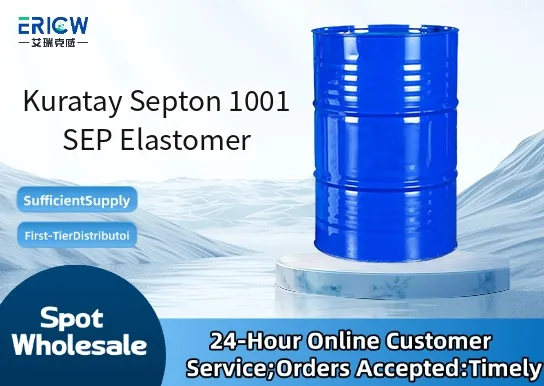
Thermoplastic elastomer based on styrene–ethylene/propylene (SEP) triblock copolymer architecture.
Excellent melt processability via extrusion, injection molding, and blow molding without vulcanization.
Superior balance of elasticity, tensile strength, and low-temperature flexibility down to –40 °C.
Good resistance to ozone, UV radiation, and polar solvents compared to conventional SBCs.
Compatible with polypropylene (PP) and polyethylene (PE), enabling robust thermoplastic vulcanizate (TPV)-like blends.
Automotive interior trim components including soft-touch door panels and instrument cluster surrounds.
Sealing systems for HVAC ducts and fluid handling gaskets requiring dynamic compression set resistance.
Consumer electronics housings and protective overmolded grips for power tools and appliances.
Medical device tubing and non-sterile wearable component housings where biocompatibility support is available upon request.
High-performance sporting goods grips, bicycle handlebar wraps, and ergonomic tool handles.
| Chemical Type | Styrene–Ethylene/Propylene (SEP) Triblock Copolymer |
| Product Form | Pellets |
| Appearance | Off-white to light tan, free-flowing granules |
| Specific Gravity (23 °C) | 0.91 ± 0.01 |
| Melt Flow Rate (230 °C / 2.16 kg) | 15–25 g/10 min |
| Shore A Hardness | 55–60 |
| Tensile Strength (ASTM D412) | 8–10 MPa |
| Elongation at Break (ASTM D412) | 450–550 % |
Q1: What is the primary function of Kuratay Septon 1001 in polymer formulations?
A: Kuratay Septon 1001 is a styrenic thermoplastic elastomer (SEP) designed to enhance flexibility, impact resistance, and melt-processability in rigid thermoplastics—particularly polypropylene (PP) and polyethylene (PE)—without compromising thermal stability or long-term mechanical integrity.
Q2: Is Kuratay Septon 1001 suitable for food-contact applications?
A: Kuratay Septon 1001 is manufactured under controlled conditions and complies with general FDA guidelines for indirect food contact when used as a functional additive in compliant base resins. Final regulatory approval depends on the complete formulation, processing conditions, and end-use requirements.
Q3: How does Kuratay Septon 1001 compare to other SEBS or SIS-based modifiers?
A: Unlike conventional SEBS or SIS elastomers, Kuratay Septon 1001 features a selectively hydrogenated polystyrene–polyethylene–polypropylene (SEP) structure, offering improved UV resistance, higher continuous-use temperature capability, and better compatibility with semi-crystalline polyolefins—especially in demanding automotive and durable goods applications.
Q4: What processing methods are recommended for Kuratay Septon 1001?
A: Kuratay Septon 1001 is compatible with standard thermoplastic processing techniques including injection molding, extrusion, and blow molding. It exhibits good melt flow and thermal stability up to typical processing temperatures for polyolefin blends, and requires no special drying prior to processing.
Contact With Us:
E-mail: wangxingqiang@ericwchem.com
Have a Questions? Call Us:
Add:
Building A1, Jiete Industrial Park, Huangpu District, Guangzhou City, Guangdong Province, China