English
 Español
 tiếng việt
 русский
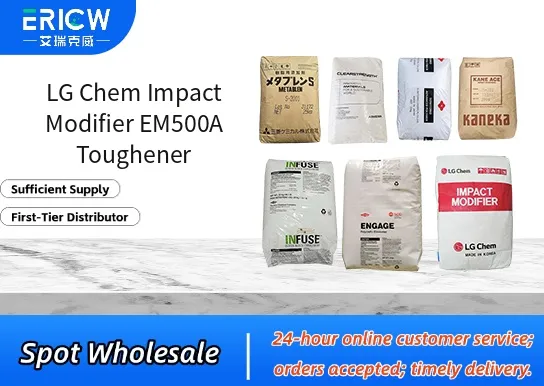
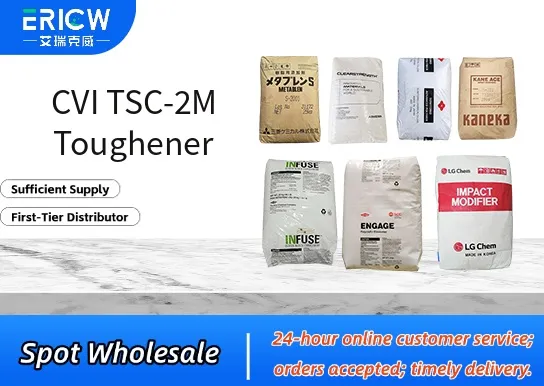
High-efficiency impact modification for engineering thermoplastics, especially ABS and PC/ABS blends.
Excellent low-temperature toughness retention down to –30 °C without compromising rigidity.
Good melt processability with minimal viscosity increase during extrusion and injection molding.
Enhanced surface gloss and reduced flow marks in finished parts compared to conventional acrylic tougheners.
Compatible with halogen-free flame retardant systems, supporting UL94 V-0 compliance in targeted formulations.
Automotive interior components (e.g., instrument panels, door trims, center consoles).
Consumer electronics housings (laptops, printers, power tools).
Electrical and electronic enclosures requiring high dimensional stability and impact resistance.
Appliance parts subject to mechanical stress and thermal cycling (e.g., refrigerator liners, washer control panels).
Medical device housings where balanced toughness, aesthetics, and regulatory-compliant processing are critical.
| Chemical Type | Acrylic core–shell polymer |
| Product Form | Free-flowing white granules |
| Appearance | Off-white to light beige pellets |
| Primary Applications | ABS, PC/ABS, and SAN-based engineering plastics |
| Key Features | Low-temperature impact enhancement, surface quality improvement, thermal stability up to 240 °C |
| Benefits | Reduced part breakage, improved mold release, lower scrap rates in high-speed molding |
| Recommended Loading Range | 3–12 wt% depending on base resin and performance requirements |
| Storage Conditions | Store in dry, cool conditions (<25 °C); keep sealed to prevent moisture absorption |
Contact With Us:
E-mail: wangxingqiang@ericwchem.com
Have a Questions? Call Us:
Add:
Building A1, Jiete Industrial Park, Huangpu District, Guangzhou City, Guangdong Province, China