English
 Español
 tiếng việt
 русский
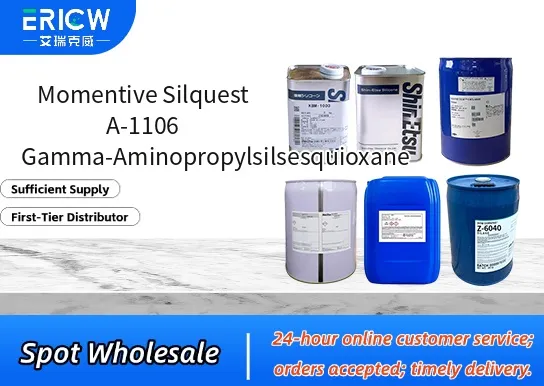
Hybrid molecular architecture combining reactive gamma-aminopropyl functionality with a cage-like silsesquioxane core.
Enhanced thermal and hydrolytic stability compared to conventional aminosilanes due to the robust Si–O–Si cage structure.
Reduced volatility and improved handling safety versus low-molecular-weight aminosilane coupling agents.
Offers dual reactivity: primary amine group for epoxy, isocyanate, or aldehyde reactions, and hydrolysable silanol precursors for inorganic surface bonding.
Enables precise nanoscale interface engineering in hybrid organic–inorganic composites without phase separation.
Reinforcement of silica- or clay-filled epoxy composites for aerospace and electronics encapsulation.
Surface modification of nanoparticles (e.g., SiO₂, TiO₂) used in UV-curable coatings and inks.
Functional additive in high-performance polyurethane adhesives and sealants requiring humidity resistance.
Co-crosslinker in silicone–epoxy hybrid resins for LED packaging and thermal interface materials.
| Chemical Type | Gamma-aminopropyl functional silsesquioxane (polyhedral oligomeric silsesquioxane, POSS®-type) |
| Product Form | Pale yellow to light amber liquid |
| Appearance | Clear, homogeneous liquid at room temperature |
| Primary Applications | Hybrid composite coupling agent, nanoparticle surface modifier, epoxy and polyurethane crosslinker |
| Key Features | Cage-structured silsesquioxane, primary amine functionality, hydrolyzable alkoxy groups |
| Benefits | Improved interfacial adhesion, reduced leaching, enhanced thermal stability, low volatility |
| Storage Conditions | Store under dry nitrogen; protect from moisture and direct sunlight |
Contact With Us:
E-mail: wangxingqiang@ericwchem.com
Have a Questions? Call Us:
Add:
Building A1, Jiete Industrial Park, Huangpu District, Guangzhou City, Guangdong Province, China