English
 Español
 tiếng việt
 русский
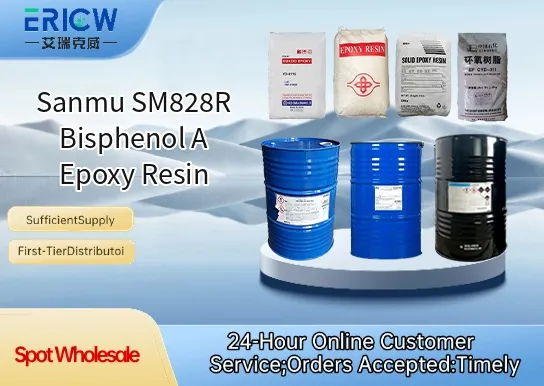
High purity bisphenol A-based epoxy resin with consistent molecular weight distribution.
Excellent thermal stability and low volatile organic compound (VOC) content.
Optimized reactivity for balanced pot life and rapid cure with standard amine or anhydride hardeners.
Superior adhesion to metals, composites, and cured polymer substrates.
Low moisture absorption and high electrical insulation performance after curing.
Structural adhesives for aerospace and automotive bonding.
Electrical encapsulation and potting compounds for power electronics.
High-performance composite matrices in wind turbine blades and sporting goods.
Coating systems for corrosion protection of offshore and industrial steel structures.
Prepregs and filament-wound components requiring dimensional stability and toughness.
| Chemical Type | Bisphenol A diglycidyl ether (DGEBA) epoxy resin |
| Product Form | Clear to pale yellow viscous liquid |
| Appearance | Homogeneous, transparent, free from gels and suspended matter |
| Epoxy Equivalent Weight (EEW) | 185–192 g/eq |
| Viscosity at 25°C | 12,000–16,000 mPa·s |
| Softening Point | 12–15°C |
| Chloride Content | ≤ 1,000 ppm |
| Volatiles Content | ≤ 0.3 wt% |
Q1: What is the primary application niche for Sanmu SM828R?
A: Sanmu SM828R is specifically formulated for high-performance protective coatings and industrial composites where enhanced chemical resistance, adhesion to metallic substrates, and thermal stability are required—commonly used in marine, infrastructure, and heavy-duty equipment applications.
Q2: How does SM828R compare to standard liquid bisphenol A epoxy resins in terms of viscosity and handling?
A: SM828R exhibits a moderately low viscosity at room temperature, facilitating easier mixing with hardeners and fillers without requiring excessive heating or solvent dilution—supporting efficient processing in both batch and continuous coating systems.
Q3: Is SM828R suitable for use in food-contact coating formulations?
A: While SM828R meets general industrial epoxy performance criteria, its suitability for food-contact applications depends on full formulation compliance—including hardener selection, cure conditions, and final regulatory evaluation by the end-user’s qualified safety assessor.
Q4: What types of curing agents are commonly compatible with SM828R?
A: SM828R demonstrates broad compatibility with amine-based hardeners (aliphatic, cycloaliphatic, and aromatic), as well as anhydride and phenolic co-curing systems—enabling tailored cure profiles for ambient, elevated-temperature, or hybrid cure processes.
Contact With Us:
E-mail: wangxingqiang@ericwchem.com
Have a Questions? Call Us:
Add:
Building A1, Jiete Industrial Park, Huangpu District, Guangzhou City, Guangdong Province, China