English
 Español
 tiếng việt
 русский
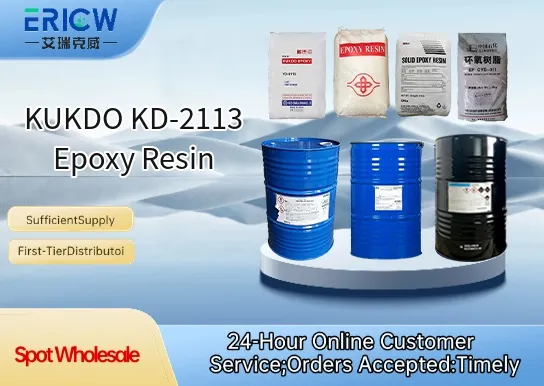
High reactivity with standard amine and anhydride curing agents for rapid gelation and short cycle times.
Excellent adhesion to metals, composites, and treated plastics under ambient and elevated temperature conditions.
Low viscosity (12,000–15,000 cP at 25°C) enabling easy processing, impregnation, and air release in casting and laminating applications.
Superior electrical insulation properties with high dielectric strength and volume resistivity (>1 × 10¹³ Ω·cm).
Good chemical resistance to alkalis, aliphatic solvents, and diluted acids after full cure.
Electrical encapsulation of transformers, reactors, and high-voltage insulators.
Structural bonding adhesive for aerospace composite assemblies and automotive powertrain components.
Matrix resin for filament-wound pressure vessels and fiber-reinforced pipes.
Castable insulation for medium-voltage switchgear housings and bushings.
Tooling resin for precision molds used in RTM and vacuum infusion manufacturing.
| Chemical Type | Bisphenol-A based liquid epoxy resin |
| Product Form | Clear to pale yellow viscous liquid |
| Appearance | Transparent, slightly yellow, homogeneous liquid |
| Epoxy Equivalent Weight (EEW) | 185–195 g/eq |
| Viscosity (25°C) | 12,000–15,000 cP |
| Softening Point | Not applicable (liquid at room temperature) |
| Chlorine Content | ≤ 0.4 wt% |
| Storage Stability | 12 months at ≤ 25°C in sealed original container |
Q1: What is the primary function of KD-2113 in epoxy formulations?
A: KD-2113 is a reactive liquid diluent designed to reduce viscosity and improve processability of standard bisphenol-A epoxy resins without significantly compromising final crosslink density or thermal performance.
Q2: Is KD-2113 compatible with common amine-based hardeners?
A: Yes — KD-2113 exhibits good compatibility with aliphatic, cycloaliphatic, and aromatic amine hardeners, and participates fully in the curing reaction as a co-monomer, contributing to network formation.
Q3: How does KD-2113 affect the pot life and cure profile of epoxy systems?
A: It typically extends working time slightly due to viscosity reduction and lower initial reactivity, but does not fundamentally alter the overall cure kinetics when used within recommended dosage ranges.
Q4: Can KD-2113 be used in high-gloss coating or electrical encapsulation applications?
A: Yes — its low volatility, excellent clarity, and ability to yield low-shrink, well-crosslinked networks make it suitable for demanding coating, casting, and encapsulation applications where surface aesthetics and dielectric integrity are critical.
Q5: What handling precautions should be observed during processing?
A: As with most reactive epoxy components, standard industrial hygiene practices apply — use appropriate PPE (gloves, eye protection), ensure adequate ventilation, and avoid prolonged or repeated skin contact to minimize potential sensitization risk.
Contact With Us:
E-mail: wangxingqiang@ericwchem.com
Have a Questions? Call Us:
Add:
Building A1, Jiete Industrial Park, Huangpu District, Guangzhou City, Guangdong Province, China