English
 Español
 tiếng việt
 русский
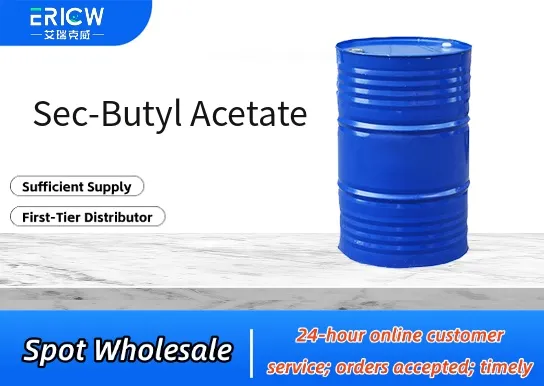
High solvency power for cellulose esters, acrylic resins, and nitrocellulose.
Moderate evaporation rate—slower than ethyl acetate but faster than amyl acetate—enabling improved flow and leveling in coatings.
Low water solubility (<0.5% w/w), minimizing haze formation in moisture-sensitive formulations.
Good compatibility with common organic solvents including toluene, xylene, and ketones.
Lower odor intensity compared to n-butyl acetate, supporting improved workplace handling.
High-solids automotive refinish coatings requiring balanced drying and film formation.
Industrial maintenance enamels and air-dry alkyd-based protective coatings.
Solvent component in gravure and flexographic inks for flexible packaging films.
Carrier solvent in pesticide formulations where controlled volatility is critical.
Intermediate diluent in adhesive systems for laminating and coil coating applications.
| Chemical Type | Organic ester (secondary alkyl acetate) |
| Product Form | Clear, colorless liquid |
| Appearance | Transparent, free from suspended matter |
| Primary Applications | Coatings, inks, adhesives, agrochemicals |
| Key Features | Moderate volatility, high resin solvency, low water miscibility |
| Boiling Point (°C) | 112–113 |
| Density (20°C, g/cm³) | 0.862–0.867 |
| Refractive Index (20°C) | 1.389–1.392 |
Contact With Us:
E-mail: wangxingqiang@ericwchem.com
Have a Questions? Call Us:
Add:
Building A1, Jiete Industrial Park, Huangpu District, Guangzhou City, Guangdong Province, China