English
 Español
 tiếng việt
 русский
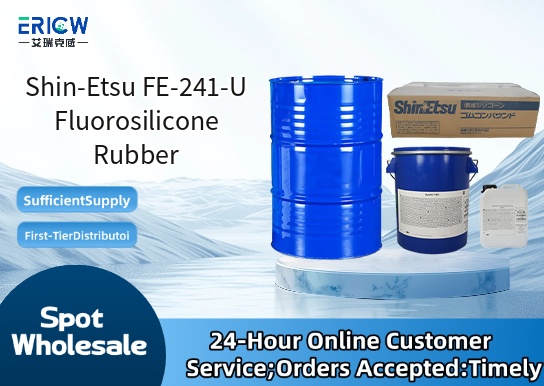
Excellent resistance to fuels, lubricants, and aggressive hydrocarbon-based fluids across wide temperature ranges.
Superior high-temperature stability with continuous service capability up to 200 °C.
Outstanding low-temperature flexibility down to –60 °C without embrittlement.
Good compression set resistance for long-term sealing performance in dynamic applications.
Enhanced weathering and ozone resistance compared to standard silicone elastomers.
Aerospace fuel system seals and gaskets exposed to jet fuels and hydraulic fluids.
Automotive turbocharger hose linings and sensor diaphragms requiring oil/fuel compatibility.
Oil & gas downhole instrumentation seals operating in sour gas (H₂S) and hydrocarbon environments.
Industrial fluid handling components for chemical processing equipment.
High-reliability electrical connectors and cable jackets in harsh thermal/chemical conditions.
| Chemical Type | Fluorosilicone elastomer (VMQ-based with trifluoropropyl methyl siloxane units) |
| Product Form | Two-part liquid silicone rubber (LSR) — Part A (base) + Part B (platinum catalyst) |
| Appearance | Pale yellow translucent liquid (Part A); colorless to pale yellow liquid (Part B) |
| Shore A Hardness (Cured, 7 days @ 150 °C) | 55 ± 3 |
| Tensile Strength (ASTM D412) | 8.0 MPa min |
| Elongation at Break (ASTM D412) | 180% min |
| Compression Set (ASTM D395, Method B, 70 hrs @ 175 °C) | ≤ 35% |
| Key Features Summary | Fuel/oil resistance, wide service temperature range (–60 °C to +200 °C), platinum-cured, low volatility |
Contact With Us:
E-mail: wangxingqiang@ericwchem.com
Have a Questions? Call Us:
Add:
Building A1, Jiete Industrial Park, Huangpu District, Guangzhou City, Guangdong Province, China