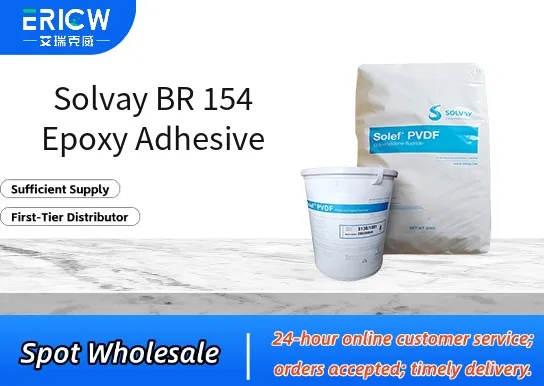
Two-component, room-temperature curing epoxy system with balanced toughness and rigidity.
Excellent adhesion to metals, composites, and thermoset plastics without surface priming.
Low exotherm during cure, minimizing thermal stress in sensitive assemblies.
Good resistance to humidity, thermal cycling, and automotive-grade fluids.
Reformulated for improved pot life stability and consistent dispensing performance.
Aerospace structural bonding of aluminum and carbon fiber reinforced polymer (CFRP) components.
Automotive powertrain assembly, including sensor mounting and transmission housing bonding.
Electronics encapsulation and thermal interface bonding in high-reliability modules.
Industrial equipment repair and permanent reassembly of precision metal fixtures.
| Chemical Type | Bisphenol-A based epoxy resin system with amine hardener |
| Product Form | Two-component liquid (Part A: resin; Part B: hardener) |
| Appearance (Mixed) | Opaque beige paste |
| Mix Ratio (by weight) | 100 : 35 (A:B) |
| Pot Life at 23°C | Approx. 60–90 minutes |
| Full Cure Time | 7 days at 23°C or 2 hours at 80°C |
| Density (Mixed) | ~1.32 g/cm³ |
| Primary Applications | Structural bonding, potting, and encapsulation in aerospace and transportation |
Q1: What is the typical cure profile for Solvay BR 154 Epoxy Adhesive?
A: Solvay BR 154 is a two-component epoxy adhesive designed for ambient or elevated temperature curing. It typically achieves handling strength within several hours at room temperature and reaches full mechanical performance after post-curing at moderate elevated temperatures, such as 60–120 °C for 1–4 hours, depending on part geometry and application requirements.
Q2: Is Solvay BR 154 suitable for bonding composite substrates such as carbon fiber reinforced polymer (CFRP) or fiberglass?
A: Yes — Solvay BR 154 is specifically formulated to provide excellent adhesion to high-performance composites, including CFRP, GFRP, and thermoset matrices. Its low shrinkage and balanced toughness support durable, fatigue-resistant bonds in structural aerospace and industrial composite assemblies.
Q3: How does Solvay BR 154 perform under thermal cycling and humidity exposure?
A: The adhesive exhibits strong resistance to thermal cycling and sustained humidity due to its highly crosslinked epoxy network and low moisture absorption. It maintains bond integrity across typical service temperature ranges and shows minimal degradation in humid environments when properly cured and protected from prolonged direct immersion.
Q4: Can Solvay BR 154 be used in applications requiring electrical insulation properties?
A: Yes — Solvay BR 154 provides excellent dielectric strength and volume resistivity, making it well-suited for electrically insulating structural bonds in power electronics, motor assemblies, and other high-voltage applications where both mechanical integrity and electrical isolation are critical.
Contact With Us:
E-mail: wangxingqiang@ericwchem.com
Have a Questions? Call Us:
Add:
Building A1, Jiete Industrial Park, Huangpu District, Guangzhou City, Guangdong Province, China
 English
 Español
 tiếng việt
 русский