English
 Español
 tiếng việt
 русский
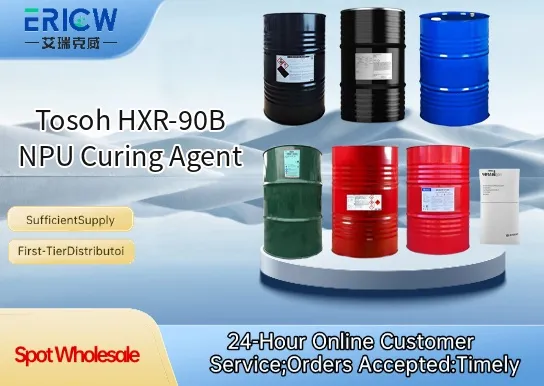
High reactivity with polyols, enabling rapid gelation and reduced cycle times in thermoset processing.
Excellent compatibility with aromatic and aliphatic isocyanates in non-polyurethane (NPU) systems.
Low volatility and minimal odor, supporting safer handling and improved workplace air quality.
Thermal stability up to 180 °C, maintaining structural integrity during high-temperature curing stages.
Consistent batch-to-batch performance, certified under ISO 9001-compliant manufacturing controls.
Electronics encapsulation resins requiring low-ionic impurity and high dielectric strength.
High-performance composites for aerospace tooling and mold-making matrices.
Advanced potting compounds used in automotive power electronics and EV battery modules.
Structural adhesives for metal-to-composite bonding in industrial assembly.
| Chemical Type | Amine-based latent curing agent |
| Product Form | Powder |
| Appearance | Off-white to light beige free-flowing powder |
| Primary Applications | Epoxy and phenolic resin systems (non-polyurethane) |
| Key Features | Latent reactivity, low moisture sensitivity, high thermal latency |
| Benefits | Extended pot life at ambient temperature; sharp cure onset above 130 °C |
| Storage Conditions | Store sealed under dry nitrogen at 5–25 °C; protect from humidity |
| Shelf Life | 12 months from date of manufacture under recommended conditions |
Q1: What is the primary function of HXR-90B in polyurethane systems?
A: HXR-90B is a non-polymeric urea-based curing agent designed to react selectively with isocyanate groups, enabling controlled crosslinking in two-component polyurethane coatings and adhesives—particularly where low viscosity, extended pot life, and excellent film hardness development are required.
Q2: How does HXR-90B differ from conventional aromatic diamine curatives?
A: Unlike traditional aromatic diamines, HXR-90B features a sterically hindered, non-polymeric structure that reduces reactivity toward moisture, improves handling safety, and delivers more consistent cure profiles without excessive exotherm—making it suitable for ambient-cure applications with enhanced storage stability.
Q3: Is HXR-90B compatible with aliphatic isocyanate prepolymers?
A: Yes, HXR-90B is broadly compatible with both aromatic and aliphatic isocyanate components, including HDI- and IPDI-based prepolymers. It supports formulations requiring UV stability and color retention when used with aliphatic systems.
Q4: What are typical handling and storage recommendations?
A: HXR-90B should be stored under dry, inert conditions (e.g., nitrogen blanket) at room temperature, protected from moisture and ambient humidity. Containers must remain tightly sealed between uses to prevent absorption of atmospheric water, which may affect reactivity and shelf life.
Contact With Us:
E-mail: wangxingqiang@ericwchem.com
Have a Questions? Call Us:
Add:
Building A1, Jiete Industrial Park, Huangpu District, Guangzhou City, Guangdong Province, China