English
 Español
 tiếng việt
 русский
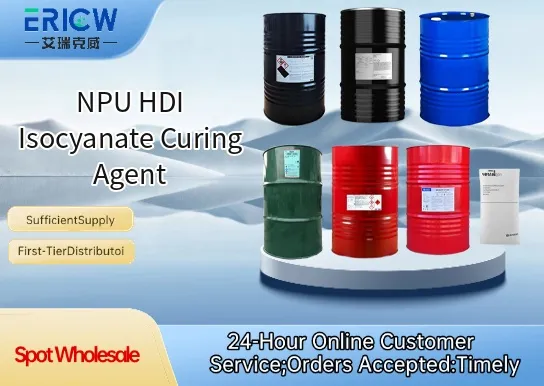
Aliphatic hexamethylene diisocyanate (HDI)-based trimer with excellent UV stability and color retention.
Low viscosity for easy handling, precise metering, and improved formulation compatibility with polyols.
Non-volatile, solvent-free liquid offering reduced VOC emissions and enhanced workplace safety.
Fast-reacting at ambient to moderate temperatures, enabling efficient production cycles without forced curing.
Provides superior chemical resistance, abrasion resistance, and mechanical toughness in cured films.
High-performance automotive clearcoats and OEM topcoats requiring gloss retention and weatherability.
Industrial maintenance coatings for machinery, metal structures, and offshore equipment.
Premium wood finishes for furniture, flooring, and architectural millwork demanding clarity and durability.
Plastic coatings for electronics housings, automotive interior trim, and consumer appliances.
Two-component polyurethane adhesives and sealants requiring flexible yet robust crosslinking.
| Chemical Type | Aliphatic HDI trimer (NCO-functional isocyanurate) |
| Product Form | Clear, viscous liquid |
| Appearance | Colorless to pale yellow, transparent, homogeneous |
| NCO Content (wt%) | 18.5 – 19.5% |
| Viscosity at 25°C (mPa·s) | 2,500 – 4,000 |
| Density at 25°C (g/cm³) | 1.18 – 1.22 |
| Flash Point (Cleveland Open Cup) | ≥ 165°C |
| Storage Stability (unopened, 25°C) | ≥ 12 months |
Q1: What is the primary function of NPU HDI Isocyanate Curing Agent in coating and adhesive formulations?
A: It serves as a crosslinking agent that reacts with hydroxyl-terminated resins—such as polyesters, acrylics, or polyethers—to form durable, chemically resistant urethane networks. This enhances hardness, abrasion resistance, and environmental durability of the cured film.
Q2: How should NPU HDI Isocyanate Curing Agent be handled and stored to maintain stability and performance?
A: Store in tightly sealed containers under dry, cool conditions (preferably below 30 °C) and protect from moisture, humidity, and direct sunlight. Avoid exposure to ambient air during handling, as it is moisture-sensitive and may form surface haze or gel over time if improperly sealed.
Q3: Is this curing agent suitable for low-VOC or high-solids coating systems?
A: Yes—it is commonly used in solvent-borne, high-solids, and certain solvent-reduced systems where controlled reactivity and film integrity are required. Its aliphatic HDI-based structure supports good weatherability and enables formulation flexibility without compromising VOC compliance goals.
Q4: What is the typical pot life after mixing with hydroxyl-functional resins?
A: Pot life varies significantly depending on resin type, catalyst presence, temperature, and humidity—but generally ranges from several hours to over 24 hours at ambient conditions when formulated without strong accelerators. Formulators are advised to conduct small-scale compatibility and gel-time testing before full-scale production.
Contact With Us:
E-mail: wangxingqiang@ericwchem.com
Have a Questions? Call Us:
Add:
Building A1, Jiete Industrial Park, Huangpu District, Guangzhou City, Guangdong Province, China