English
 Español
 tiếng việt
 русский
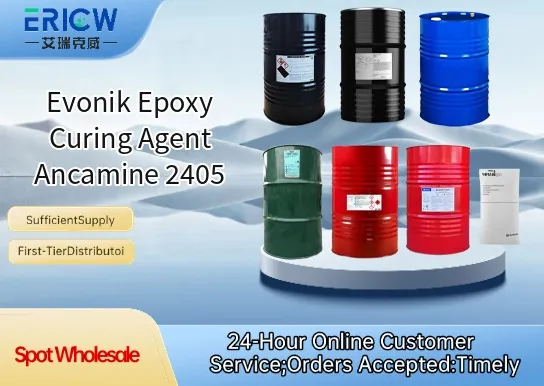
Low-viscosity polyetheramine-based curing agent enabling excellent flow and wetting of substrates.
Provides fast ambient-cure reactivity with good pot life for efficient processing in industrial applications.
Delivers superior flexibility and impact resistance in cured epoxy systems without sacrificing chemical resistance.
Offers low volatility and low odor, supporting safer handling and compliance with industrial hygiene standards.
Compatible with standard DGEBA and modified epoxy resins for broad formulation versatility.
High-performance protective coatings for steel and concrete infrastructure.
Electrical encapsulation and potting compounds requiring thermal stability and dielectric integrity.
Adhesives and structural bonding systems in transportation and wind energy sectors.
Composite matrix resins for filament-wound and pultruded components.
Repair mortars and high-build flooring systems demanding rapid return-to-service.
| Chemical Type | Polyetheramine (tertiary amine-terminated) |
| Product Form | Liquid |
| Appearance | Clear, pale yellow liquid |
| Primary Applications | Coatings, adhesives, composites, encapsulation |
| Key Features | Ambient-curing, flexible, low volatility, low odor |
| Benefits | Improved toughness, extended pot life, enhanced substrate adhesion |
| Storage Stability | 12 months unopened at 20–25 °C |
| Reactivity Profile | Fast ambient cure with moderate exotherm |
Q1: What is the primary chemical class and functional mechanism of Ancamine 2405?
A: Ancamine 2405 is a low-viscosity, aliphatic polyamine-based epoxy curing agent. It functions through nucleophilic addition to epoxide groups, enabling rapid ambient- or elevated-temperature cure with good flexibility, adhesion, and chemical resistance in final networks.
Q2: Is Ancamine 2405 suitable for high-solids or solvent-free epoxy formulations?
A: Yes — its low viscosity and high amine hydrogen equivalent weight make it well-suited for high-solids, low-VOC, and 100% solids epoxy systems, including coatings, adhesives, and composites where reduced emissions and improved film build are required.
Q3: How does Ancamine 2405 compare to conventional DETA or TETA in terms of handling and safety?
A: Ancamine 2405 offers significantly lower volatility and reduced skin sensitization potential compared to traditional short-chain aliphatic amines like DETA or TETA. It has milder odor and improved workplace handling characteristics, though standard PPE and ventilation remain essential during use.
Q4: Can Ancamine 2405 be used in moisture-sensitive applications such as concrete primers or damp-surface coatings?
A: While Ancamine 2405 exhibits better moisture tolerance than many fast-reacting amines, it is not classified as a true moisture-cure or water-tolerant system. For damp-substrate applications, formulation optimization — often with co-curing agents or surface pre-treatment — is recommended to ensure reliable performance.
Contact With Us:
E-mail: wangxingqiang@ericwchem.com
Have a Questions? Call Us:
Add:
Building A1, Jiete Industrial Park, Huangpu District, Guangzhou City, Guangdong Province, China