English
 Español
 tiếng việt
 русский
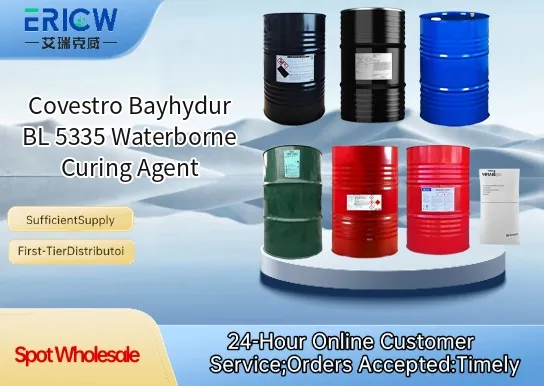
Waterborne aliphatic polyisocyanate dispersion offering low VOC and reduced environmental impact.
Excellent compatibility with aqueous acrylic and polyester dispersions for stable two-component systems.
Fast ambient-cure performance with good early hardness development and low temperature curing capability.
Superior hydrolytic stability compared to conventional waterborne isocyanates, ensuring extended pot life.
Provides outstanding gloss retention, weather resistance, and chemical resistance in final coatings.
Architectural wall coatings requiring high durability and low-emission compliance.
Industrial maintenance coatings for metal substrates in transportation and infrastructure sectors.
Wood finishing coatings for furniture and interior joinery where low odor and fast turnaround are critical.
Plastic coatings for automotive interior parts and consumer electronics housings.
High-performance floor coatings for commercial and institutional buildings.
| Chemical Type | Aliphatic polyisocyanate (HDI-based) dispersion |
| Product Form | White to slightly yellow liquid dispersion |
| Appearance | Opaque, homogeneous dispersion |
| Solids Content (wt. %) | 48–52 % |
| NCO Content (wt. %) | 6.0–7.0 % |
| pH | 7.5–9.0 |
| Density (20 °C) | 1.08–1.12 g/cm³ |
| Viscosity (23 °C, Brookfield RVT, spindle #3, 20 rpm) | 150–400 mPa·s |
Q1: What is the primary chemical composition of Bayhydur BL 5335?
A: Bayhydur BL 5335 is a water-dispersible aliphatic polyisocyanate based on hexamethylene diisocyanate (HDI) trimer chemistry, modified with hydrophilic groups to enable stable dispersion in aqueous systems without added organic solvents or surfactants.
Q2: How does Bayhydur BL 5335 differ from solvent-based HDI curing agents in terms of application performance?
A: As a waterborne system, BL 5335 enables lower VOC formulations and improved workplace safety, while maintaining good compatibility with common waterborne polyols. It typically delivers comparable film hardness, chemical resistance, and UV stability to solvent-borne HDI trimers—though drying kinetics and pot life may vary depending on ambient humidity and co-solvent use.
Q3: What types of resins or polymer dispersions is Bayhydur BL 5335 compatible with?
A: BL 5335 is designed for use with a broad range of waterborne acrylics, polyurethanes, and polyester polyols. Compatibility should be verified experimentally, as performance depends on pH, particle size, ionic stabilization, and presence of reactive functional groups in the base resin.
Q4: Does Bayhydur BL 5335 require catalysts or co-solvents for optimal crosslinking?
A: Catalysts such as tertiary amines or metal carboxylates are not strictly required but may be used to adjust cure speed and low-temperature performance. Co-solvents (e.g., dipropylene glycol monomethyl ether) are often employed to improve film formation and reduce water sensitivity during drying—dosage depends on formulation requirements and application method.
Q5: How should Bayhydur BL 5335 be stored and handled to maintain stability?
A: Store in tightly sealed containers at temperatures between 5 °C and 30 °C, away from moisture, strong acids, and amines. Prolonged exposure to freezing conditions or high humidity may affect dispersion stability. Once opened, minimize air contact and use within recommended shelf-life under controlled conditions.
Contact With Us:
E-mail: wangxingqiang@ericwchem.com
Have a Questions? Call Us:
Add:
Building A1, Jiete Industrial Park, Huangpu District, Guangzhou City, Guangdong Province, China