English
 Español
 tiếng việt
 русский
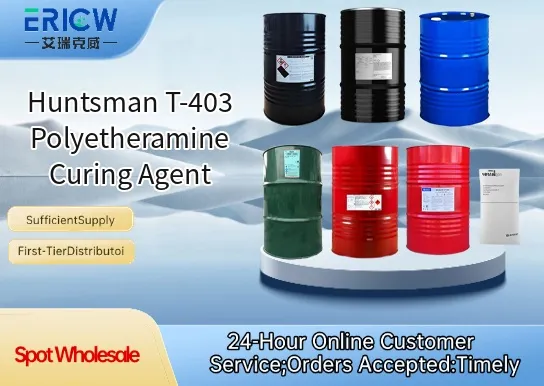
Low-viscosity liquid enabling easy handling and efficient mixing with epoxy resins.
Flexible molecular structure delivering excellent impact resistance and toughness in cured systems.
Shorter gel time compared to conventional aliphatic amines, supporting faster production cycles.
Good compatibility with standard diglycidyl ether of bisphenol-A (DGEBA) and other common epoxy resins.
Low volatility and low odor, contributing to improved workplace safety and reduced VOC emissions.
Structural adhesives for automotive and aerospace bonding applications.
High-performance composite matrices in wind turbine blade manufacturing.
Electrical encapsulation and potting compounds requiring thermal and mechanical resilience.
Coatings for industrial flooring and protective linings exposed to mechanical stress.
Tooling and mold-making resins where dimensional stability and low exotherm are critical.
| Chemical Type | Polyetheramine (tertiary amine-terminated) |
| Product Form | Liquid |
| Appearance | Clear, pale yellow to amber liquid |
| Amine Value | 190–210 mg KOH/g |
| Viscosity (25°C) | 150–250 cP |
| Active Hydrogen Equivalent Weight | ~100 g/eq |
| Primary Applications | Epoxy curing agent for structural adhesives, composites, coatings, and encapsulants |
| Key Features | Flexibility, low viscosity, fast reactivity, low volatility |
Q1: What is the primary function of T-403 in epoxy formulations?
A: T-403 is a polyetheramine-based curing agent designed to react with epoxy resins to form flexible, tough, and chemically resistant thermoset networks—particularly valued for low-temperature cure capability and extended pot life.
Q2: How does T-403 compare to traditional aliphatic amines in terms of handling and safety?
A: T-403 exhibits significantly lower volatility and reduced skin sensitization potential compared to many conventional aliphatic amines, contributing to improved workplace safety and easier handling without compromising reactivity.
Q3: Can T-403 be used in moisture-sensitive or high-humidity applications?
A: Yes—T-403 demonstrates good tolerance to ambient moisture and is frequently selected for coatings and adhesives applied under non-ideal environmental conditions where consistent cure performance is required.
Q4: Is T-403 compatible with standard epoxy resins such as DGEBA types?
A: Yes—T-403 is broadly compatible with liquid and solid bisphenol-A and bisphenol-F epoxy resins, and is commonly formulated into industrial coatings, composites, and structural adhesives without requiring specialized resin modifications.
Contact With Us:
E-mail: wangxingqiang@ericwchem.com
Have a Questions? Call Us:
Add:
Building A1, Jiete Industrial Park, Huangpu District, Guangzhou City, Guangdong Province, China