English
 Español
 tiếng việt
 русский
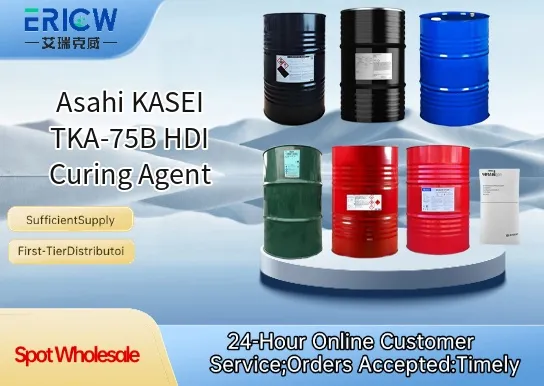
High-performance aliphatic polyisocyanate based on hexamethylene diisocyanate (HDI) trimer chemistry.
Low viscosity and excellent compatibility with common hydroxyl-functional resins, enabling easy formulation and processing.
Outstanding weather resistance, UV stability, and gloss retention in demanding outdoor applications.
Low monomeric HDI content (< 0.1 wt%), supporting safer handling and compliance with stringent occupational health regulations.
Fast ambient- and forced-dry cure profile without compromising pot life or film integrity.
Automotive clearcoats and basecoats requiring high durability and color fidelity.
Industrial maintenance coatings for metal structures, machinery, and agricultural equipment.
Architectural coatings for aluminum extrusions, façade panels, and curtain walls.
Plastic coatings for automotive interior trim and consumer electronics housings.
High-end wood finishes for furniture and flooring where clarity and scratch resistance are critical.
| Chemical Type | Aliphatic HDI-based polyisocyanate (trimer) |
| Product Form | Liquid |
| Appearance | Clear, pale yellow liquid |
| NCO Content (wt%) | 17.0 – 18.0 |
| Viscosity at 25°C (mPa·s) | 1,200 – 1,800 |
| Density at 25°C (g/cm³) | 1.16 – 1.19 |
| Monomeric HDI Content | < 0.1 wt% |
| Solvent | Acetate-based (e.g., butyl acetate) |
Q1: What is the primary function of TKA-75B in coating and adhesive formulations?
A: TKA-75B is a low-viscosity, aliphatic HDI-based polyisocyanate curing agent designed to react with hydroxyl-functional resins (e.g., polyesters, acrylics, or polyethers) to form durable, weather-resistant polyurethane networks. It enables ambient- or low-bake cure profiles while supporting excellent gloss retention and UV stability.
Q2: How does TKA-75B differ from conventional HDI biuret or isocyanurate curing agents?
A: TKA-75B features a proprietary molecular architecture that balances reactivity, pot life, and film performance. Compared to standard HDI biurets, it offers improved compatibility with polar resins and enhanced storage stability; compared to highly branched isocyanurates, it provides better flow and leveling without sacrificing crosslink density or chemical resistance.
Q3: Is TKA-75B suitable for high-solids or solvent-reduced systems?
A: Yes — its low viscosity and high NCO content make it well-suited for high-solids formulations. It enables formulators to reduce solvent demand while maintaining workable rheology and achieving full cure without excessive bake temperatures or extended dwell times.
Q4: What are key handling and storage recommendations for TKA-75B?
A: Store in tightly sealed containers under dry, cool conditions (below 30°C), away from moisture, strong bases, and oxidizing agents. Prolonged exposure to humidity may cause gelation or CO₂ evolution due to reaction with water. Always use dry handling equipment and inert gas blanketing for extended storage or repeated dispensing.
Q5: Can TKA-75B be used in food-contact or industrial maintenance coatings?
A: TKA-75B is intended for industrial and protective coating applications where regulatory compliance depends on the final formulation. It is not pre-approved for direct food-contact use; end-use compliance must be verified by the formulator based on applicable regional regulations and full system testing.
Contact With Us:
E-mail: wangxingqiang@ericwchem.com
Have a Questions? Call Us:
Add:
Building A1, Jiete Industrial Park, Huangpu District, Guangzhou City, Guangdong Province, China