English
 Español
 tiếng việt
 русский
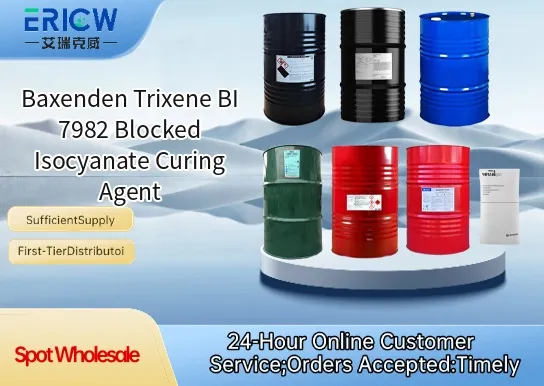
High thermal stability with clean deblocking profile above 130 °C.
Excellent compatibility with hydroxyl-functional acrylics, polyesters, and alkyds.
Low volatility and minimal odor—suitable for low-VOC and high-solids coating systems.
Enables ambient-cure storage stability with rapid crosslinking upon thermal activation.
Consistent reactivity and reproducible film properties across production batches.
Automotive OEM clearcoats and basecoats requiring high-gloss, chip-resistant finishes.
Industrial coil coatings for pre-painted metal roofing and appliance panels.
General-purpose can and coil coatings demanding excellent flow, leveling, and durability.
Architectural metal coatings where weather resistance and color retention are critical.
Baking enamels for metal furniture, HVAC components, and agricultural equipment.
| Chemical Type | Blocked aliphatic isocyanate (hexamethylene diisocyanate derivative) |
| Product Form | Liquid |
| Appearance | Clear, pale yellow liquid |
| Primary Applications | Thermally activated crosslinker for hydroxyl-containing resins |
| Key Features | Deblocking temperature ~130–150 °C; compatible with acid-catalyzed and neutral cure systems |
| Benefits | Enhanced pot life, reduced NCO volatility, improved film hardness and chemical resistance |
| Storage Stability | Stable at 25 °C for ≥12 months in sealed containers |
| Recommended Handling | Store below 30 °C; protect from moisture and direct sunlight |
Q1: What is the primary function of Trixene BI 7982 in coating and adhesive formulations?
A: Trixene BI 7982 serves as a thermally activated, blocked isocyanate curing agent that enables one-component (1K) storage stability while delivering robust crosslinking upon heating. It reacts with hydroxyl, amine, or carboxyl functional groups in resins to form durable polyurethane networks.
Q2: At what temperature does Trixene BI 7982 typically deblock and initiate crosslinking?
A: Deblocing begins around 130–140 °C, with full reactivity generally achieved between 150–170 °C. The exact onset and rate depend on formulation composition, film thickness, and heating profile—making it suitable for industrial baking processes such as coil coating, automotive refinish, and powder coating cure cycles.
Q3: Which resin systems is Trixene BI 7982 commonly compatible with?
A: It exhibits broad compatibility with hydroxyl-functional acrylics, polyesters, alkyds, and cellulose esters. It is widely used in high-performance 1K solventborne and high-solids coatings where ambient stability and controlled thermal cure are required.
Q4: How should Trixene BI 7982 be handled and stored to maintain performance?
A: Store in tightly sealed containers under dry, cool conditions (below 30 °C), away from moisture, strong acids, and reducing agents. Prolonged exposure to humidity or elevated temperatures may lead to premature deblocking or viscosity increase. Always follow standard industrial handling practices for isocyanate derivatives.
Contact With Us:
E-mail: wangxingqiang@ericwchem.com
Have a Questions? Call Us:
Add:
Building A1, Jiete Industrial Park, Huangpu District, Guangzhou City, Guangdong Province, China