English
 Español
 tiếng việt
 русский
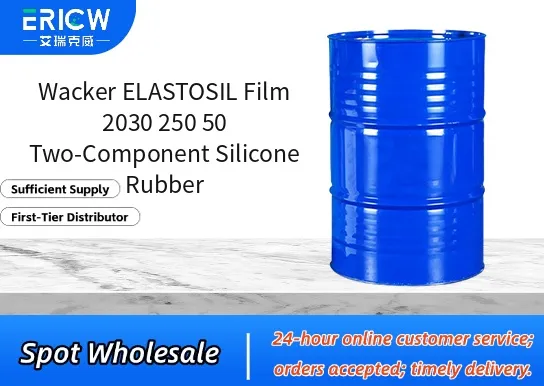
Platinum-catalyzed, addition-cure two-component silicone rubber system with excellent transparency and optical clarity.
Low viscosity before curing enables uniform film formation and easy processing via casting, slot-die coating, or roll-to-roll methods.
Excellent thermal stability and long-term UV resistance, maintaining mechanical integrity under demanding environmental conditions.
High elongation at break and outstanding elasticity for flexible, durable thin-film applications.
Biocompatibility compliant with ISO 10993-5 (cytotoxicity) and USP Class VI, suitable for medical device interfaces.
Medical-grade protective films for wearable sensors and skin-contact electronics.
Optically clear encapsulation layers in flexible OLED lighting and display modules.
Dielectric barrier films in high-voltage flexible printed circuits and energy harvesting devices.
Functional release liners and carrier films for pressure-sensitive adhesive transfer systems.
Thin-film membranes for microfluidic chip bonding and lab-on-a-chip sealing.
| Chemical Type | Platinum-catalyzed addition-cure silicone rubber |
| Product Form | Two-component liquid system (Part A + Part B) |
| Appearance | Transparent, low-viscosity liquids (Part A: colorless; Part B: pale yellow) |
| Mixing Ratio (by weight) | 1:1 (A:B) |
| Curing Conditions | 150 °C for 5 minutes (or ambient cure with extended time using accelerator) |
| Shore A Hardness (cured) | 30–35 |
| Elongation at Break (cured) | ≥ 450 % |
| Transmittance (at 550 nm, 1 mm thickness) | ≥ 92 % |
Contact With Us:
E-mail: wangxingqiang@ericwchem.com
Have a Questions? Call Us:
Add:
Building A1, Jiete Industrial Park, Huangpu District, Guangzhou City, Guangdong Province, China