English
 Español
 tiếng việt
 русский
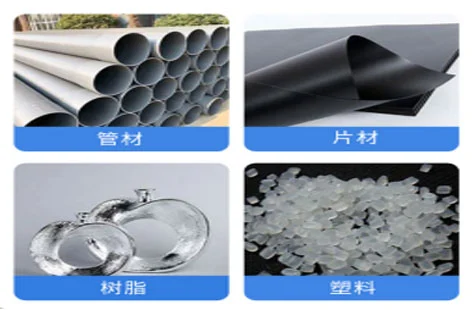
617A: Suitable for rubber processing, it enhances metal demolding, dispersion, and glossiness without adversely affecting rubber performance. It is applicable to industries such as conveyor belts and hoses.
6A: Used in solvent-based paints and inks, it improves surface properties like scuff resistance and wear resistance, and can also be used as a viscosity diluent.
629A: A low-density oxidized polyethylene homopolymer, it serves as a metal demolding agent for PVC and a rheological additive for solvent-based paints. It can also be emulsified for use in waterborne applications, such as textiles and coatings, to reduce friction coefficients and enhance smoothness.
316A: Primarily used in plastic extrusion, injection molding, etc., it acts as an external lubricant, improving demolding effects and thermal stability. It is also suitable for waterborne coatings and 8A: Mainly used in plastic extrusion, injection molding, calendering, and blow molding, it serves as an external lubricant, enhancing product gloss, delaying friction heat accumulation, and improving thermal stability. It is also applicable to resin wire and cable, polyolefin, styrene, and polyvinyl chloride fields.
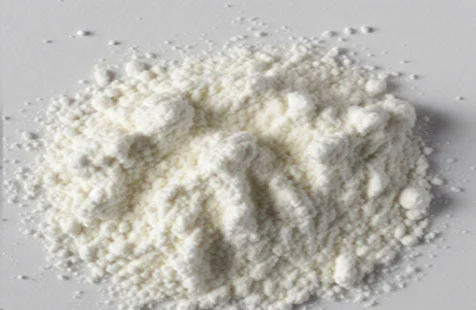
Addition amount issue: The addition amount of wax powder needs to be controlled within a certain range.
Excessive addition may affect the mechanical properties of plastics, leading to a decrease in the strength, toughness, and other properties of plastic products.
A: Wax powder provides multiple functions in coatings: improving hardness and abrasion resistance, enhancing slip and feel, degassing and defoaming, preventing blocking, aiding wetting and dispersion, improving leveling, and adjusting gloss.
A: PE wax (Polyethylene wax): high hardness, excellent abrasion resistance, cost-effective — suitable for general wear and scratch resistance needs. Oxidized PE wax (OPE wax): contains polar groups, offering better compatibility with resins and superior dispersion, especially suitable for waterborne systems. Selection guide: choose PE wax for general abrasion resistance; choose OPE wax for waterborne systems or applications requiring better compatibility.
A: Particle size selection depends on coating thickness and desired surface effect. Fine particle size (<10μm): suitable for thin coatings, provides a smooth feel, minimal impact on gloss. Coarse particle size (>20μm): offers stronger abrasion resistance and textured effects, but may affect gloss and transparency. We recommend consulting our technical support team based on your coating thickness and surface effect requirements.
A: The general recommended dosage is 0.5%-3% of the total formulation (based on solid content). Actual dosage depends on wax type, coating system, and desired effect. We can provide formulation optimization recommendations.
A: Yes. Fine particle size wax has minimal impact on gloss and can be used in high-gloss systems. Coarse particle size wax produces a matting effect. Oxidized PE wax generally offers higher transparency with less impact on gloss. For maintaining high gloss, we recommend fine-particle PE wax or high-transparency OPE wax.
A: Wax forms for powder coatings include micronized powder, powder, granules, and flakes. Micronized wax offers the best dispersion and better leveling assistance. Selection should consider compatibility and incorporation method (post-add). For detailed selection, please refer to our product specifications or contact technical support.
A: We are official authorized distributors for Clariant, BASF, and other global brands, providing genuine products. Meanwhile, our self-brand ERICW series wax products are benchmarked against international brands on key performance indicators, offering better cost-effectiveness. Customers can choose based on budget and performance requirements.
Contact With Us:
E-mail: wangxingqiang@ericwchem.com
Have a Questions? Call Us:
Add:
Building A1, Jiete Industrial Park, Huangpu District, Guangzhou City, Guangdong Province, China