English
 Español
 tiếng việt
 русский
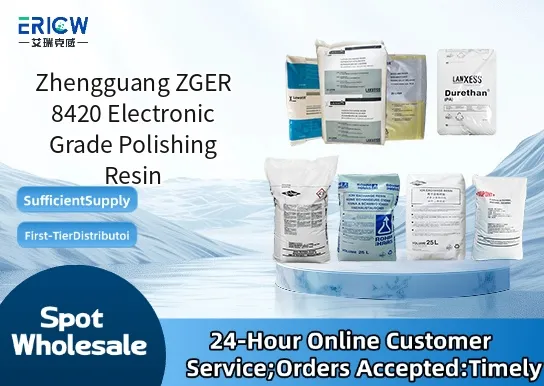
Ultra-low ionic impurity content, meeting stringent SEMI F55 and ASTM D1193 Type E1 water purity requirements for semiconductor manufacturing.
Highly uniform spherical bead morphology ensures consistent polishing performance and minimal surface scratching on wafers.
Optimized cation/anion exchange capacity balance for precise pH and conductivity control in ultrapure water (UPW) final polishing loops.
Exceptional chemical stability in high-purity deionized water systems, resistant to oxidative degradation under continuous operation.
Low extractables profile—validated via TOC and silica leaching tests—to prevent contamination of sensitive photolithography and etch processes.
Final polishing stage in ultrapure water (UPW) generation systems for semiconductor fabrication facilities (fabs).
Polishing resin in mixed-bed ion exchange units for critical rinse water in 300mm wafer cleaning lines.
Ultra-low conductivity polishing media for CMP (Chemical Mechanical Planarization) slurry make-up water systems.
High-purity water polishing in advanced packaging and MEMS manufacturing cleanroom water loops.
Final-stage deionization in analytical laboratory UPW systems requiring sub-ppb metal ion removal.
| Chemical Type | Strong acid cation / strong base anion mixed-bed resin |
| Product Form | Uniform spherical beads, pre-mixed 1:1 cation:anion ratio |
| Appearance | Transparent amber (cation) and white (anion) beads, no fines or dust |
| Particle Size Range | 0.45–0.75 mm (D₁₀ ≥ 0.40 mm, D₉₀ ≤ 0.80 mm) |
| Moisture Content | 48–52% (as shipped, hydrated form) |
| Exchange Capacity (Total) | ≥ 1.6 eq/L (wet volume, both resins combined) |
| Maximum Operating Temperature | 50 °C (continuous), 60 °C (intermittent) |
| Storage Stability | 24 months unopened at 5–35 °C; avoid freezing and direct sunlight |
Q1: What distinguishes ZGER 8420 from standard polishing resins?
A: ZGER 8420 is specifically formulated for electronic-grade applications, featuring ultra-low ionic impurity content, tightly controlled particle size distribution, and high chemical stability in deionized water systems—critical for semiconductor wafer cleaning and precision optical component polishing where residue or conductivity spikes must be avoided.
Q2: Is ZGER 8420 compatible with common CMP slurries and post-CMP cleaning chemistries?
A: Yes—ZGER 8420 demonstrates excellent compatibility with neutral to mildly alkaline aqueous-based slurries and cleaning formulations. It does not interfere with common chelating agents or surfactants and maintains colloidal stability without gelling or phase separation under typical process conditions.
Q3: How should ZGER 8420 be stored and handled to preserve its performance?
A: Store in original sealed containers at ambient temperature (15–30 °C), away from direct sunlight and strong oxidizers. Avoid prolonged exposure to humid environments or open-air storage—moisture uptake may affect dispersion consistency. Always pre-mix with deionized water under gentle agitation before integration into final formulations.
Q4: Can ZGER 8420 be used in inline filtration or recirculating polishing systems?
A: Yes—it exhibits low fouling tendency and consistent flow behavior in stainless steel and polymeric fluidic systems. Its narrow particle size distribution supports stable operation with standard 0.5–1.0 µm depth filters and is suitable for closed-loop recirculation when paired with appropriate monitoring of pH and conductivity.
Contact With Us:
E-mail: wangxingqiang@ericwchem.com
Have a Questions? Call Us:
Add:
Building A1, Jiete Industrial Park, Huangpu District, Guangzhou City, Guangdong Province, China