English
 Español
 tiếng việt
 русский
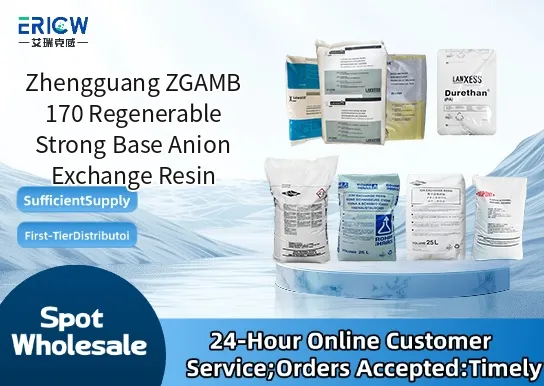
Highly regenerable Type I strong base anion exchange resin with excellent chemical stability in alkaline and oxidizing environments.
Superior chloride selectivity and high total exchange capacity (>1.2 eq/L in Cl⁻ form) for efficient removal of anionic contaminants.
Uniform spherical bead morphology ensures low pressure drop, consistent flow distribution, and extended service life in column operations.
Manufactured under strict ISO 9001-certified quality control with low extractables and minimal fines generation.
Compatible with standard NaOH regeneration protocols (2–4% w/w), enabling cost-effective cyclic operation in industrial water treatment systems.
Dealkalization and silica removal in high-purity boiler feedwater pretreatment systems.
Nitrate and sulfate reduction in municipal drinking water purification plants.
Anion polishing in pharmaceutical-grade purified water (PW) and water-for-injection (WFI) production.
Recovery and concentration of valuable anions (e.g., molybdate, tungstate) in hydrometallurgical process streams.
Removal of organic acids and trace anionic impurities in food & beverage processing water circuits.
| Chemical Type | Polystyrene-divinylbenzene copolymer with quaternary ammonium functional groups (Type I) |
| Product Form | Moist, spherical beads |
| Appearance | Off-white to light yellow, translucent beads |
| Functional Group | –N⁺(CH₃)₃ |
| Total Exchange Capacity (dry basis) | ≥4.8 meq/g |
| Moisture Content | 45–50% (as shipped) |
| Particle Size Range | 0.3–1.2 mm (≥95% retained on 1.4 mm sieve, ≥95% passes 0.25 mm sieve) |
| Uniformity Coefficient | ≤1.6 |
Q1: What types of anions does ZGAMB 170 effectively remove from aqueous solutions?
A: ZGAMB 170 is designed to efficiently exchange common inorganic anions such as chloride, sulfate, nitrate, bicarbonate, and phosphate, as well as certain organic anions encountered in water treatment and process streams. Its strong base functionality ensures high affinity across a broad pH range.
Q2: Can ZGAMB 170 be regenerated multiple times without significant loss of capacity?
A: Yes—ZGAMB 170 is specifically engineered for repeated regeneration using standard alkaline regenerants like sodium hydroxide. Performance stability over multiple cycles depends on feedwater quality and adherence to recommended regeneration protocols, but typical service life extends over hundreds of cycles under controlled conditions.
Q3: Is ZGAMB 170 suitable for use in pharmaceutical or food-grade water purification systems?
A: ZGAMB 170 is manufactured to meet stringent purity and consistency requirements for critical applications. While it is not pre-certified for specific regulatory compliance (e.g., USP, EP, or FDA food contact), it is commonly selected for high-purity water polishing in pharmaceutical and beverage industries when validated as part of an integrated system.
Q4: How does ZGAMB 170 compare to conventional gel-type strong base resins in terms of kinetic performance and fouling resistance?
A: ZGAMB 170 features a macroporous structure that provides improved mass transfer kinetics and greater tolerance to organic fouling and suspended solids compared to traditional gel-type resins. This makes it especially effective in challenging feedwaters with variable composition or moderate levels of natural organic matter.
Contact With Us:
E-mail: wangxingqiang@ericwchem.com
Have a Questions? Call Us:
Add:
Building A1, Jiete Industrial Park, Huangpu District, Guangzhou City, Guangdong Province, China