English
 Español
 tiếng việt
 русский
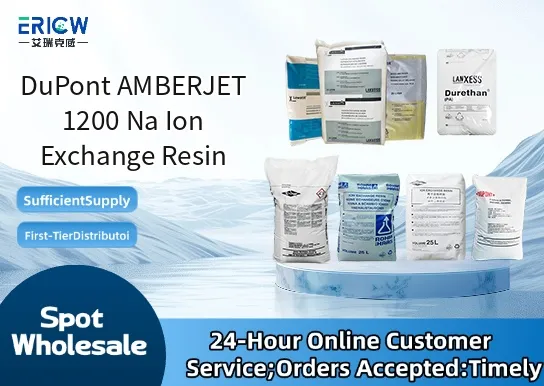
High-capacity, gel-type strong acid cation exchange resin in sodium form.
Optimized for softening applications with excellent kinetic performance and low pressure drop.
Consistent spherical bead morphology ensures uniform flow distribution and reduced channeling.
Superior physical and chemical stability across repeated regeneration cycles.
Low fines generation and high attrition resistance for extended service life.
Industrial boiler feedwater softening.
Food and beverage processing water conditioning.
Hospital and pharmaceutical facility pretreatment systems.
Commercial laundries requiring scale-free rinse water.
Municipal and institutional hot water system protection.
| Chemical Type | Strong Acid Cation (SAC), Sulfonic Acid Group |
| Product Form | Sodium Form (Na⁺) |
| Appearance | Amber, spherical beads |
| Functional Group | –SO₃H |
| Ionic Capacity (min.) | 2.0 eq/L (dry basis) |
| Moisture Content | 45–50% (as shipped) |
| Particle Size Range | 0.3–1.2 mm |
| Uniformity Coefficient (max.) | 1.6 |
Q1: What is the primary function of AMBERJET 1200 Na in water treatment systems?
A: AMBERJET 1200 Na is a strong acid cation exchange resin in the sodium form, designed primarily for base exchange softening—removing calcium and magnesium ions from feed water to prevent scale formation in boilers, cooling towers, and low-pressure steam generation systems.
Q2: Can AMBERJET 1200 Na be used for demineralization or full deionization?
A: No—it is not suitable as a standalone resin for complete demineralization. For full deionization, it must be paired with a strong base anion resin (e.g., AMBERJET 4200 Cl) in a dual-bed or mixed-bed configuration to remove both cations and anions effectively.
Q3: How is AMBERJET 1200 Na regenerated after exhaustion?
A: The resin is regenerated using a concentrated sodium chloride (NaCl) brine solution. Regeneration restores the sodium form by displacing accumulated hardness ions (Ca²⁺, Mg²⁺), enabling repeated service cycles with consistent softening performance.
Q4: Is AMBERJET 1200 Na compatible with high-temperature or high-pressure applications?
A: It is intended for use in ambient- to moderately elevated-temperature service conditions, typically up to 120°C. Prolonged exposure to temperatures above this range or to oxidizing agents may accelerate physical or chemical degradation and reduce operational lifespan.
Q5: What are key handling and storage recommendations for this resin?
A: Store in original sealed packaging at temperatures between 5°C and 40°C, away from direct sunlight and freezing conditions. Avoid prolonged contact with dry air, as dehydration can cause irreversible bead fracture. Always follow DuPont’s technical bulletins for safe transfer, wetting, and column loading procedures.
Contact With Us:
E-mail: wangxingqiang@ericwchem.com
Have a Questions? Call Us:
Add:
Building A1, Jiete Industrial Park, Huangpu District, Guangzhou City, Guangdong Province, China