English
 Español
 tiếng việt
 русский
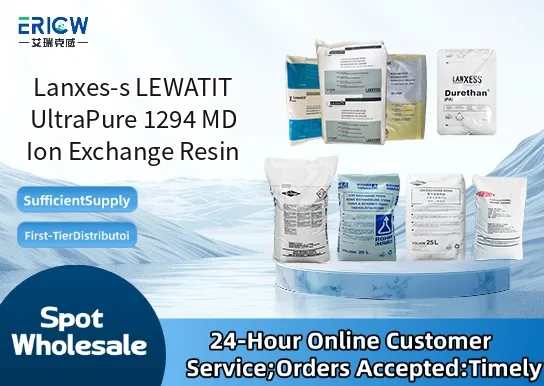
Ultra-low extractables profile specifically engineered for ultra-high-purity water production in pharmaceutical and biotech manufacturing.
Highly uniform spherical beads with narrow particle size distribution (0.45–1.25 mm) ensuring consistent hydraulic performance and minimal pressure drop.
Exceptional chemical stability in strong acid and alkali environments, enabling robust regeneration cycles and extended service life.
Low total organic carbon (TOC) release and certified compliant with USP <841>, EP 2.2.43, and JP XVII standards for purified water systems.
Optimized for mixed-bed configurations with LEWATIT® UltraPure 1295 MD to achieve resistivity >18.2 MΩ·cm at 25°C.
Final polishing step in pharmaceutical-grade purified water (PW) and water for injection (WFI) generation systems.
Ultrapure water production for semiconductor wafer cleaning and photolithography processes.
Critical pretreatment and polishing in biopharmaceutical process water loops requiring endotoxin-free output.
High-reliability demineralization in clinical laboratory analyzers and diagnostic instrument feed water systems.
Regulatory-compliant water purification for cell therapy and mRNA vaccine manufacturing facilities.
| Chemical Type | Strong Acid Cation (SAC), sulfonated polystyrene-divinylbenzene gel matrix |
| Product Form | Moist, sodium-form spherical beads |
| Appearance | Amber, transparent, uniform spherical particles |
| Primary Applications | Polishing resin in mixed-bed deionization for ultrapure water |
| Key Features | Low TOC leachables, high regenerability, USP/EP/JP compliant |
| Functional Capacity (H⁺ form) | ≥ 1.8 eq/L (dry weight basis) |
| Moisture Content | 47–53% (as shipped) |
| Particle Size Range | 0.45 – 1.25 mm (95% retained on 0.45 mm sieve) |
Q1: What is the primary application of Lanxes-s LEWATIT UltraPure 1294 MD?
A: This resin is specifically engineered for high-purity water polishing in ultra-sensitive applications such as pharmaceutical-grade water systems, biopharmaceutical process streams, and semiconductor rinse water treatment—where removal of trace ionic contaminants is critical.
Q2: How does Lanxes-s LEWATIT UltraPure 1294 MD differ from standard strong acid cation resins?
A: It features an ultra-low extractables profile, enhanced chemical stability under repeated regeneration cycles, and a highly uniform bead structure optimized for minimal pressure drop and maximum kinetic efficiency in high-flow, low-particulate environments.
Q3: Is this resin suitable for use in sanitary or hygienic system designs?
A: Yes—it is designed for compatibility with sanitary piping, SIP (steam-in-place), and CIP (clean-in-place) protocols. Its robust crosslinked matrix resists degradation during thermal and oxidative cleaning, supporting long service life in regulated bioprocessing environments.
Q4: What regeneration chemicals are recommended for optimal performance?
A: Sodium chloride (NaCl) is the standard regenerant for cation exchange mode. For specialized applications requiring ultra-low sodium leakage, dilute hydrochloric acid may be used—always following validated regeneration protocols aligned with system design and regulatory expectations.
Q5: Can Lanxes-s LEWATIT UltraPure 1294 MD be used in mixed-bed configurations?
A: Yes—it is commonly deployed in mixed-bed polishers alongside high-purity anion resins to achieve resistivity levels exceeding 18.0 MΩ·cm. Its low swelling ratio and mechanical strength support stable bed integrity and minimize resin intermixing during service and backwash.
Contact With Us:
E-mail: wangxingqiang@ericwchem.com
Have a Questions? Call Us:
Add:
Building A1, Jiete Industrial Park, Huangpu District, Guangzhou City, Guangdong Province, China