English
 Español
 tiếng việt
 русский
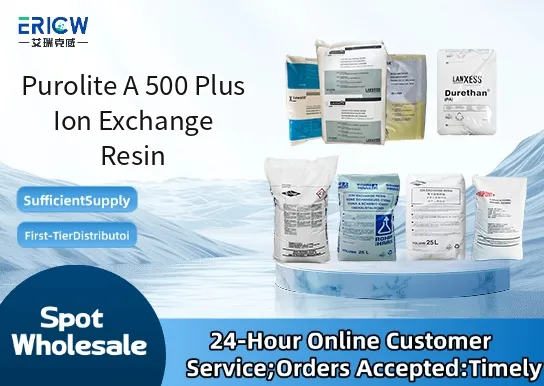
Highly selective for nitrate and perchlorate removal from drinking water and process streams.
Superior kinetic performance due to uniform macroporous bead structure and optimized surface area.
Exceptional chemical and physical stability in chloride-rich environments, minimizing degradation during regeneration.
Low operating pressure drop and excellent hydraulic flow characteristics for high-throughput systems.
Regenerable with common brine solutions, supporting sustainable and cost-effective long-term operation.
Drinking water treatment for selective nitrate and perchlorate reduction to meet regulatory standards.
Pharmaceutical process water polishing where low ionic leaching and high purity are critical.
Food and beverage production water conditioning for consistent ion profile control.
Electronics manufacturing ultrapure water pre-treatment targeting trace anion removal.
Municipal and industrial wastewater tertiary treatment for targeted anion recovery or discharge compliance.
| Chemical Type | Strong Base Anion Exchange Resin (Type I, Macroporous) |
| Product Form | Moist, spherical beads |
| Appearance | Beige to light brown, uniform macroreticular beads |
| Functional Group | Quaternary ammonium (–N⁺(CH₃)₃) |
| Ion Form | Chloride form (Cl⁻) |
| Particle Size Range | 0.3 – 1.2 mm |
| Moisture Content | 48 – 55% (as shipped) |
| Exchange Capacity (min.) | 1.2 eq/L (Cl⁻ form) |
Q1: What is the primary functional group and matrix type of Purolite A 500 Plus?
A: Purolite A 500 Plus is a macroporous, strongly basic anion exchange resin with quaternary ammonium functional groups (Type I) grafted onto a styrene-divinylbenzene copolymer matrix. Its macroporous structure provides enhanced kinetic performance and stability in challenging feed streams.
Q2: How does A 500 Plus differ from standard gel-type strong base anion resins?
A: Unlike conventional gel-type resins, A 500 Plus features a macroporous morphology that delivers superior resistance to organic fouling, better performance in low-ionic-strength or high-silica waters, and improved regeneration efficiency—especially in applications involving nitrate, sulfate, or chromate removal.
Q3: Is Purolite A 500 Plus suitable for potable water treatment?
A: Yes, Purolite A 500 Plus is manufactured and tested to meet global regulatory requirements for drinking water applications, including NSF/ANSI Standard 61 certification for incidental contact. It is commonly used for nitrate and perchlorate reduction in municipal and point-of-use systems.
Q4: What are typical regeneration conditions for this resin?
A: Regeneration is typically performed using sodium chloride (NaCl) solution at concentrations between 8% and 10% w/w, with bed volumes and flow rates adjusted based on service cycle length and contaminant loading. Higher regenerant concentration or extended contact time may be beneficial for silica or organic fouling recovery.
Contact With Us:
E-mail: wangxingqiang@ericwchem.com
Have a Questions? Call Us:
Add:
Building A1, Jiete Industrial Park, Huangpu District, Guangzhou City, Guangdong Province, China