English
 Español
 tiếng việt
 русский
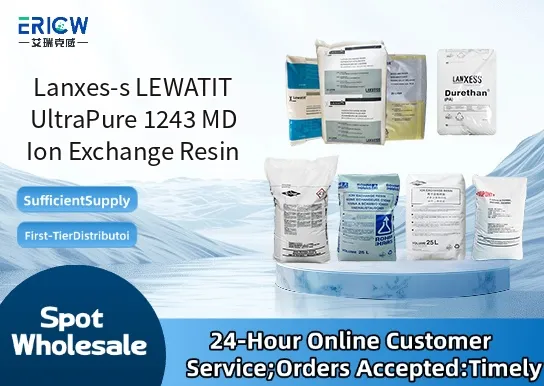
Ultra-low extractables profile specifically engineered for ultra-high-purity water production in pharmaceutical and biotech manufacturing.
Highly uniform spherical beads with narrow particle size distribution (0.45–0.63 mm) ensuring consistent hydraulic performance and minimal pressure drop.
Exceptional chemical stability in strong oxidizing environments, compatible with hydrogen peroxide and ozone sanitization protocols.
Low total organic carbon (TOC) leachables—validated to meet USP <843> and EP 2.2.48 requirements for purified water systems.
Regenerable with standard NaOH/NaCl solutions; optimized for long service life and predictable capacity retention over multiple cycles.
Final polishing step in pharmaceutical-grade purified water (PW) and water-for-injection (WFI) generation systems.
Ultrapure water treatment for biopharmaceutical process skids and clean-in-place (CIP) rinse water loops.
Critical deionization in semiconductor fab ultrapure water (UPW) sub-loops requiring low silica and boron breakthrough control.
Polishing resin in laboratory-grade water purification systems compliant with ASTM Type I specifications.
End-stage ion removal in single-use bioprocessing buffer preparation systems.
| Chemical Type | Strong base anion exchange resin, Type I, gel matrix, quaternary ammonium functional group |
| Product Form | Moist, spherical beads |
| Appearance | Off-white to light yellow, translucent beads |
| Particle Size Range | 0.45–0.63 mm |
| Uniformity Coefficient | ≤1.6 |
| Moisture Content | 47–53% (as shipped) |
| Functional Capacity (Cl⁻ form) | ≥1.1 eq/L (minimum, measured at 25°C) |
| Maximum Operating Temperature | 60°C |
Q1: What is the primary application of LEWATIT UltraPure 1243 MD in pharmaceutical and biotech processes?
A: LEWATIT UltraPure 1243 MD is specifically engineered for high-purity polishing applications in pharmaceutical water systems and buffer preparation, where removal of trace ionic contaminants—including heavy metals and low-concentration counterions—is critical to meet stringent quality requirements.
Q2: How does the "UltraPure" designation differentiate this resin from standard LEWATIT 1243 MD grades?
A: The UltraPure designation indicates an enhanced manufacturing and rinsing protocol that significantly reduces extractables—such as organic leachables and residual monomers—making it suitable for use in final water polishing steps where even ultra-low levels of non-ionic impurities must be controlled.
Q3: Is LEWATIT UltraPure 1243 MD compatible with sanitization using hot water or steam?
A: Yes, this resin is designed for robust thermal stability and can withstand repeated hot water sanitization cycles up to 95 °C; however, prolonged exposure above 95 °C or direct steam injection without prior cooling may affect long-term performance and should be evaluated under site-specific operating conditions.
Q4: Can this resin be used in mixed-bed configurations for ultrapure water generation?
A: Yes, LEWATIT UltraPure 1243 MD is commonly deployed in mixed-bed systems alongside its corresponding strong base anion exchange counterpart to achieve resistivity levels exceeding 18.0 MΩ·cm, particularly in point-of-use pharmaceutical water loops requiring minimal TOC contribution and consistent ion removal efficiency.
Contact With Us:
E-mail: wangxingqiang@ericwchem.com
Have a Questions? Call Us:
Add:
Building A1, Jiete Industrial Park, Huangpu District, Guangzhou City, Guangdong Province, China