English
 Español
 tiếng việt
 русский
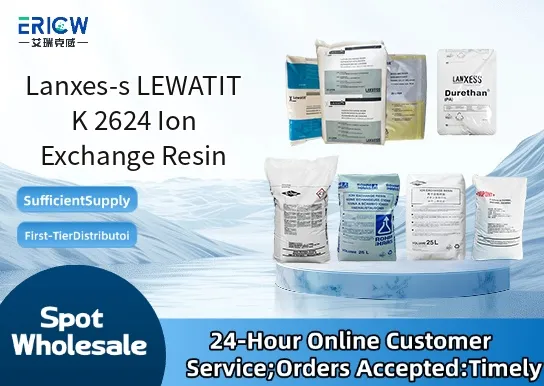
Highly selective for potassium ions (K⁺) in mixed-cation environments.
Stable polyacrylic matrix ensures excellent mechanical strength and long service life.
Low pressure drop design supports high-flow-rate operation in industrial columns.
Optimized bead uniformity (0.3–1.2 mm) enables consistent hydraulic performance and minimal channeling.
Regenerable with standard KCl or NaCl solutions, supporting sustainable process cycles.
Potassium removal and recovery in pharmaceutical wastewater streams.
Targeted K⁺ separation in food & beverage processing, especially fruit juice demineralization.
Pre-concentration of potassium prior to crystallization in fertilizer production.
Polishing step in ultrapure water systems requiring ultra-low alkali metal content.
Ion substitution in specialty chemical synthesis where potassium selectivity is critical.
| Chemical Type | Polyacrylic acid-based weakly acidic cation exchanger |
| Product Form | Moist, spherical beads |
| Appearance | Opaque white to off-white beads |
| Particle Size Range | 0.3 – 1.2 mm |
| Moisture Content | 45 – 50 % (as shipped) |
| Functional Group | Carboxylic acid (–COOH) |
| Exchange Capacity (H⁺ form) | ≥ 10.0 eq/L (dry base) |
| pH Stability Range | 1 – 12 |
Q1: What is the primary functional group and ionic form of LEWATIT K 2624?
A: LEWATIT K 2624 is a strongly basic anion exchange resin in the chloride form, featuring quaternary ammonium functional groups grafted onto a styrene-divinylbenzene matrix.
Q2: In which types of industrial water treatment applications is this resin typically deployed?
A: It is commonly used for demineralization, nitrate removal, sulfate reduction, and selective anion scavenging in boiler feedwater, ultrapure water production, and wastewater polishing—particularly where high chemical stability and consistent regeneration performance are required.
Q3: How does LEWATIT K 2624 compare to standard Type I and Type II strong base anion resins in terms of selectivity and regeneration efficiency?
A: K 2624 exhibits enhanced selectivity for multivalent anions (e.g., SO₄²⁻, NO₃⁻) over monovalent ions like Cl⁻, and demonstrates improved regeneration kinetics with sodium chloride—enabling more efficient cycle-to-cycle performance in demanding service conditions.
Q4: Is this resin suitable for use in food-grade or pharmaceutical process water systems?
A: While LEWATIT K 2624 is manufactured under stringent quality controls and widely applied in high-purity water systems, formal compliance with food contact or pharmaceutical regulatory requirements depends on final system validation, including rinse protocols and operational parameters defined by the end-user’s quality assurance process.
Contact With Us:
E-mail: wangxingqiang@ericwchem.com
Have a Questions? Call Us:
Add:
Building A1, Jiete Industrial Park, Huangpu District, Guangzhou City, Guangdong Province, China