English
 Español
 tiếng việt
 русский
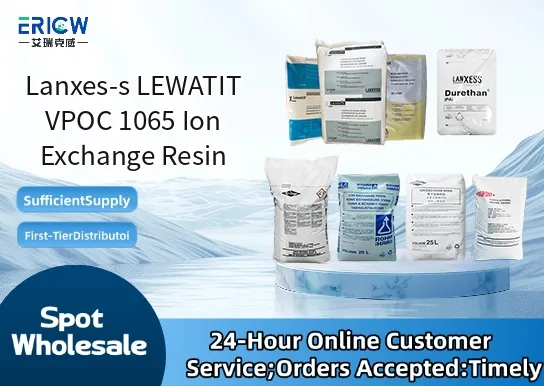
Highly selective for phosphate and arsenate anions in complex water matrices.
Exceptional chemical stability in acidic to neutral pH ranges (pH 2–8).
Low pressure drop due to uniform spherical bead morphology and optimized particle size distribution.
Regenerable with common brine or dilute alkali solutions, supporting sustainable operation.
Low soluble organic carbon (SOC) leaching, ensuring compliance with stringent potable water standards.
Drinking water treatment for phosphate and arsenic removal.
Pretreatment of industrial process water prior to reverse osmosis or electrodialysis.
Phosphate polishing in municipal wastewater tertiary treatment systems.
Removal of oxyanions from pharmaceutical and biotech process streams.
Groundwater remediation for arsenic-contaminated aquifers.
| Chemical Type | Strong base anion exchange resin (Type I quaternary ammonium) |
| Product Form | Moist, spherical beads |
| Appearance | Opaque white to light yellow beads |
| Functional Group | –N(CH₃)₃Cl |
| Matrix | Crosslinked polystyrene-divinylbenzene (DVB ~8%) |
| Particle Size Range | 0.315 – 1.25 mm |
| Moisture Content | 48 – 52% (as shipped) |
| Ion Form | Chloride form (Cl⁻) |
Q1: What is the primary functional purpose of Lanxes-s LEWATIT VPOC 1065 in industrial processes?
A: Lanxes-s LEWATIT VPOC 1065 is a strongly acidic cation exchange resin designed for selective removal of multivalent metal ions—particularly calcium, magnesium, iron, and heavy metals—from aqueous streams in process water treatment, catalyst protection, and purification applications.
Q2: Is this resin suitable for use in food-grade or pharmaceutical water systems?
A: Yes—LEWATIT VPOC 1065 is manufactured under quality systems aligned with ISO 9001 and is commonly deployed in purified water systems supporting pharmaceutical manufacturing and beverage production, provided it is validated and regenerated in accordance with facility-specific GMP protocols.
Q3: How does Lanxes-s LEWATIT VPOC 1065 differ from standard gel-type cation resins?
A: VPOC 1065 features a macroporous polystyrene matrix with high crosslinking and optimized surface area, offering superior kinetic performance, enhanced stability in oxidizing environments, and improved resistance to fouling by organic matter compared to conventional gel-type resins—making it especially effective in challenging feedwaters.
Q4: What regeneration chemicals are typically used with this resin?
A: Standard regeneration employs sodium chloride (NaCl) for softening applications; however, for deep metal removal or specialty recovery, hydrochloric acid (HCl) or sulfuric acid (H₂SO₄) may be applied depending on the target ion and system design requirements.
Contact With Us:
E-mail: wangxingqiang@ericwchem.com
Have a Questions? Call Us:
Add:
Building A1, Jiete Industrial Park, Huangpu District, Guangzhou City, Guangdong Province, China