English
 Español
 tiếng việt
 русский
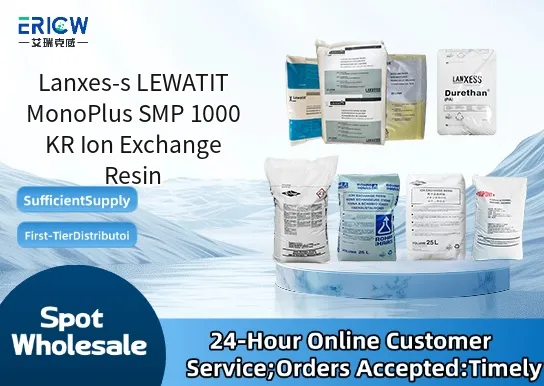
Highly selective for potassium (K⁺) and ammonium (NH₄⁺) ions in mixed-cation environments.
Superior chemical and osmotic stability, ensuring long service life under rigorous regeneration cycles.
Optimized spherical morphology with narrow particle size distribution for uniform hydraulic performance.
Low pressure drop characteristics, enabling efficient operation in both fixed-bed and continuous ion exchange systems.
Manufactured to strict ISO 9001-certified quality standards with full traceability and batch documentation.
Ammonium removal from municipal and industrial wastewater prior to discharge or reuse.
Potassium recovery and concentration in food processing effluents and fermentation broths.
Polishing step in high-purity water production for pharmaceutical and biotech manufacturing.
Selective softening of high-sodium, low-calcium brines in specialty chemical synthesis.
Regenerable NH₄⁺ capture in closed-loop aquaculture and hydroponic nutrient management systems.
| Chemical Type | Strong acid cation exchanger (sulfonic acid functional group) |
| Product Form | Moist, spherical beads |
| Appearance | Opaque amber to light brown beads |
| Functional Group | –SO₃H (sulfonic acid) |
| Matrix Structure | Crosslinked polystyrene-divinylbenzene (PS-DVB) |
| Ion Form | Potassium (K⁺) form |
| Moisture Content | Approx. 48–52% (w/w) |
| Uniformity Coefficient | ≤ 1.5 |
Q1: What is the primary functional group and ionic form of LEWATIT MonoPlus SMP 1000 KR?
A: LEWATIT MonoPlus SMP 1000 KR is a strongly acidic cation exchange resin in the potassium (K⁺) form, featuring sulfonic acid functional groups grafted onto a highly crosslinked polystyrene-divinylbenzene matrix.
Q2: Is this resin suitable for food-grade or pharmaceutical water purification applications?
A: Yes — LEWATIT MonoPlus SMP 1000 KR is manufactured under quality systems compliant with ISO 9001 and is widely used in high-purity water treatment for pharmaceutical, biotech, and food & beverage industries. Its low extractables profile and stable matrix support compliance with relevant pharmacopoeial requirements for purified water systems.
Q3: How does SMP 1000 KR differ from standard gel-type strong acid cation resins?
A: Unlike conventional gel-type resins, SMP 1000 KR features a macroporous structure with uniform particle size distribution and enhanced mechanical stability. This provides superior resistance to osmotic shock, improved kinetics for ion exchange in variable feedwater conditions, and longer service life in demanding cyclic operations.
Q4: Can this resin be regenerated, and what are typical regeneration agents?
A: Yes — SMP 1000 KR is fully regenerable using common inorganic salts such as potassium chloride (KCl) or sodium chloride (NaCl), depending on the desired ionic form. Regeneration efficiency remains high across multiple cycles when operated within recommended temperature and flow parameters.
Contact With Us:
E-mail: wangxingqiang@ericwchem.com
Have a Questions? Call Us:
Add:
Building A1, Jiete Industrial Park, Huangpu District, Guangzhou City, Guangdong Province, China