English
 Español
 tiếng việt
 русский
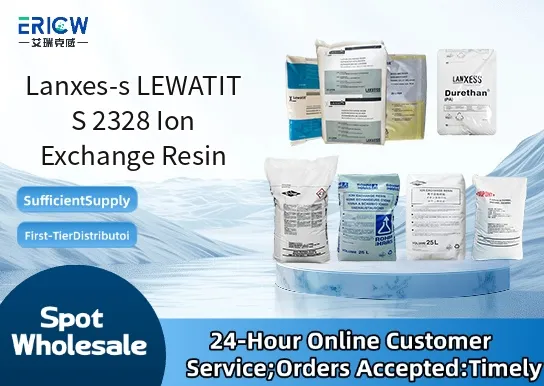
High-capacity strong acid cation exchanger based on sulfonated polystyrene-divinylbenzene matrix.
Optimized for high-efficiency softening and demineralization in industrial water treatment systems.
Excellent physical and chemical stability across wide pH (0–14) and temperature ranges (up to 120 °C).
Uniform spherical bead morphology ensures low pressure drop and consistent hydraulic performance.
Regenerable with standard NaCl, HCl, or H₂SO₄ solutions—enabling cost-effective cyclic operation.
Industrial boiler feedwater softening and pretreatment in power generation plants.
Pretreatment for reverse osmosis (RO) and electrodeionization (EDI) systems.
Process water conditioning in pharmaceutical and biotechnology manufacturing.
Food and beverage production where consistent low-hardness water is required.
Chemical process streams requiring selective removal of divalent cations (e.g., Ca²⁺, Mg²⁺).
| Chemical Type | Strong Acid Cation (SAC), sulfonic acid functional group |
| Product Form | Moist, spherical beads |
| Appearance | Opaque amber to brown beads |
| Functional Capacity (H⁺ form, min.) | 1.9 eq/L (dry) |
| Moisture Content (as shipped) | 45–50 % (w/w) |
| Particle Size Range | 0.3–1.2 mm (≥95 %) |
| Uniformity Coefficient (max.) | 1.6 |
| Maximum Operating Temperature | 120 °C |
Q1: What is the primary functional group and ionic form of LEWATIT S 2328?
A: LEWATIT S 2328 is a strongly acidic cation exchange resin based on a sulfonated polystyrene-divinylbenzene matrix, supplied in the sodium (Na⁺) form for general softening and selective metal ion removal applications.
Q2: Is LEWATIT S 2328 suitable for potable water treatment?
A: Yes — when regenerated and rinsed according to standard industry protocols, LEWATIT S 2328 complies with common regulatory expectations for drinking water applications, including NSF/ANSI Standard 61 certification requirements for materials in contact with potable water.
Q3: How does temperature affect the performance of this resin?
A: Performance remains stable across typical process temperatures (5–40 °C); however, prolonged exposure above 50 °C may accelerate physical degradation and reduce operational lifespan. Optimal capacity and kinetics are generally observed between 15–35 °C.
Q4: Can LEWATIT S 2328 be used for selective removal of heavy metals from industrial effluents?
A: Yes — its high crosslinking and uniform bead structure support effective uptake of divalent cations such as Cu²⁺, Ni²⁺, Zn²⁺, and Pb²⁺, especially under controlled pH and competing ion conditions. Selectivity can be enhanced through tailored regeneration strategies.
Q5: What are key handling and storage recommendations?
A: Store in original packaging at temperatures between 5–30 °C, avoiding freezing and direct sunlight. Keep moist during handling to prevent dehydration-induced cracking; if dried, rehydrate gradually using dilute salt solutions before service use.
Contact With Us:
E-mail: wangxingqiang@ericwchem.com
Have a Questions? Call Us:
Add:
Building A1, Jiete Industrial Park, Huangpu District, Guangzhou City, Guangdong Province, China